
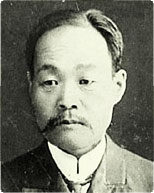
Yu Kil-chun
Yu Kil-chun was a Korean independence activist. Born October 24, 1856, in Seoul. Died September 30, 1914, in Seoul. Known for Things Seen and Heard from a Voyage to the West. Educated at Boston University and The Governor's Academy. Awards include Order of the Taegeuk.
Facts
18 facts · 1 confirmed by two sources · 1 cited · 15 from one source · 1 where the sources disagree
What’s different
- Born: we show October 24, 1856 (Sources disagree). Wikipedia says November 21, 1856
Where this comes from
Papalocal keeps its own record. It started from these sources; what each one said is kept here as it was copied, so a change on their side never changes this page by itself. Tap one to read its version.
What Wikidata says · copied November 16, 2026 · revision 2545223547
- Described as
- Korean independence activist (1856–1914)
- Other names
- Yu Gil-jun, Yu Kilchun
- Born
- October 24, 1856 · 1 reference
- Died
- September 30, 1914 · 1 reference
- Born in
- Seoul
- Died in
- Seoul
- Cause of death
- disease
- Citizen of
- Joseon (–1897); Korean Empire (1897–1910); Empire of Japan (1910–)
- Occupation
- autobiographer; writer; journalist; politician · 1 reference; poet · 1 reference
- Education
- Boston University; The Governor's Academy · 1 reference
- Known for
- Things Seen and Heard from a Voyage to the West
- Awards
- Order of the Taegeuk
- Lived in
- Seoul · 1 reference
- Wikipedias with a page
- 36
Wikidata item Q486303 (wikidata.org/wiki/Q486303), public domain (CC0). Copied November 16, 2026.
What Wikipedia says · copied November 16, 2026 · revision 1346616162
Yu Kilchun (Korean: 유길준; November 21, 1856 – September 30, 1914) was a Korean politician. Yu lived during the last few decades of Joseon and the Korean Empire, before the occupation of the peninsula by Japan. As a young man, he studied the Chinese classics. Unusually for the time, he came to embrace foreign ideas and literature.
Yu achieved a number of notable firsts: in 1883, he was among the first Koreans to visit the United States. He was also the first Korean to study abroad in Japan and the first in the United States. He also wrote some of the earliest books and translations on Western topics in contemporary Korean, which significantly impacted the reform movement in the Korean Empire. He is also remembered for his contributions to Korean linguistics.
Yu was among the earliest Korean independence activists and reformers. He proposed numerous changes to modernize the Korean government, including the establishment of a constitutional monarchy and increased popular participation in government. This brought him into conflict with the Korean monarchy, who forced him to flee to Japan. There, he orchestrated a coup against the Korean monarchy that failed. By the time he was eventually pardoned and allowed to return to the peninsula, it was already firmly under Japanese influence. He fell into a depression and died several years after the formal beginning of the occupation of Korea.
Yu is now remembered as a chinilpa or collaborator with Japan. In the aftermath of the assassination of Empress Myeongseong, he was named one of the Eulmi Four Traitors that assisted in her death.
- Born, in its opening lines
- November 21, 1856
- Died, in its opening lines
- September 30, 1914
From the Wikipedia article “Yu Kilchun” (en.wikipedia.org/wiki/Yu_Kilchun), by its contributors, under CC BY-SA 4.0 (creativecommons.org/licenses/by-sa/4.0/). Copied November 16, 2026; not changed.
Confirmed Two sources agree. Cited One source, and it names where it got it. One source One source, without a reference of its own. Sources disagree The sources disagree. We show the best-supported value and keep theirs below.
