
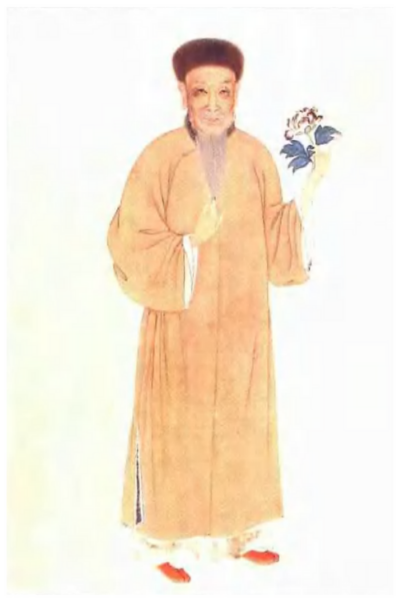
Yuan Mei
Yuan Mei was a poet, essayist, scholar of the Qing Dynasty. Born 1716, in Hangzhou. Died January 3, 1797, in Nanjing. Positions held include county magistrate and Shujishi of Qing dynasty.
Facts
19 facts · 2 confirmed by two sources · 7 cited · 10 from one source
Where this comes from
Papalocal keeps its own record. It started from these sources; what each one said is kept here as it was copied, so a change on their side never changes this page by itself. Tap one to read its version.
What Wikidata says · copied November 16, 2026 · revision 2557093943
- Described as
- poet, essayist, scholar of the Qing Dynasty (1716-1797)
- Other names
- Xiaoqixia, Suiyuanxiansheng, Yuloumeng, Cunzhai, Lüjingxuan, Xiaomianzhai, Jianzhai, Biyuzhai, Lüxiaoge, Ruiguan, Nanyuan, Cangshanjushi
- Born
- 1716 · 8 references
- Died
- January 3, 1797 · 5 references
- Born in
- Hangzhou
- Died in
- Nanjing · 1 reference
- Citizen of
- Qing dynasty · 1 reference
- Occupation
- painter · 1 reference; poet; writer · 2 references; calligrapher; ci lyric writer; politician
- Positions held
- county magistrate; Shujishi of Qing dynasty
- Spouse
- Wang Shi · 1 reference
- Children
- Yuan Chi · 1 reference; Yuan Tong · 1 reference
- Mother
- Zhang Shi · 1 reference
- Siblings
- Yuan Ji; Yuan Zhu
- Wikipedias with a page
- 34
Wikidata item Q147220 (wikidata.org/wiki/Q147220), public domain (CC0). Copied November 16, 2026.
What Wikipedia says · copied November 16, 2026 · revision 1333255340
Yuan Mei (Chinese: 袁枚; pinyin: Yuán Méi; 1716–1797) was a Chinese poet and artist. He was often mentioned with Ji Yun as the "Nan Yuan Bei Ji" (Chinese: 南袁北紀; pinyin: nányuán běijì; lit. 'Yuan of the south and Ji of the north').
- Born, in its opening lines
- 1716
- Died, in its opening lines
- 1797
From the Wikipedia article “Yuan Mei” (en.wikipedia.org/wiki/Yuan_Mei), by its contributors, under CC BY-SA 4.0 (creativecommons.org/licenses/by-sa/4.0/). Copied November 16, 2026; not changed.
Confirmed Two sources agree. Cited One source, and it names where it got it. One source One source, without a reference of its own. Sources disagree The sources disagree. We show the best-supported value and keep theirs below.
