
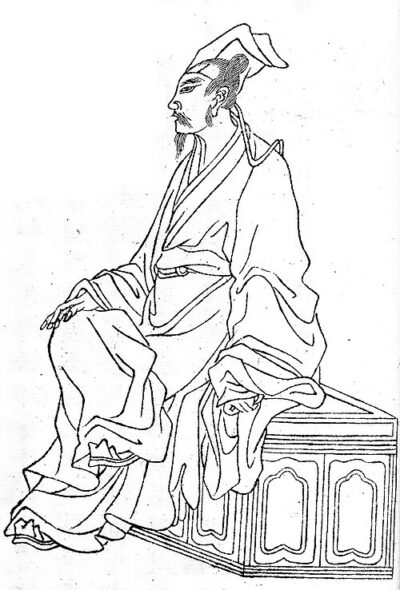
Yuan Zhen
Yuan Zhen was a Chinese poet. Born 779, in Luoyang. Died 831, in Jiangxia District. Positions held include Chancellor of the Tang dynasty (822–).
Facts
14 facts · 2 confirmed by two sources · 5 cited · 7 from one source
Where this comes from
Papalocal keeps its own record. It started from these sources; what each one said is kept here as it was copied, so a change on their side never changes this page by itself. Tap one to read its version.
What Wikidata says · copied November 16, 2026 · revision 2561119607
- Described as
- Chinese poet
- Other names
- Weiming, Yuan caizi, Weizhi, Yüan Chen
- Born
- 779 · 9 references
- Died
- 831 · 9 references
- Born in
- Luoyang
- Died in
- Jiangxia District
- Buried in
- Xianyang County · 1 reference
- Citizen of
- Tang dynasty · 1 reference
- Occupation
- poet; writer; calligrapher
- Positions held
- Chancellor of the Tang dynasty (822–)
- Spouse
- Pei Shu · 1 reference; Wei Cong · 1 reference
- Children
- Yuan Daohu · 1 reference
- Father
- Yuan Kuan
- Wikipedias with a page
- 31
Wikidata item Q468709 (wikidata.org/wiki/Q468709), public domain (CC0). Copied November 16, 2026.
What Wikipedia says · copied November 16, 2026 · revision 1338108653
Yuan Zhen (Chinese: 元稹; Wade–Giles: Yüan Chen; 779 – September 2, 831), courtesy name Weizhi (微之), was a Chinese novelist, poet, and politician of the middle Tang dynasty. In prose literature, Yuan Zhen is particularly known for his work Yingying's Biography, which has often been adapted for other treatments, including operatic and musical ones. In poetry, he is remembered for the inclusion of some of his poems by popular anthologies, his verses on exotic topics (such as the former Liangzhou), and for being part of the group of "New Yuefu" poets, which often used poetry as a form of expression and protest, but one potentially subtle enough to avoid the likely repercussions of more direct criticism. The poetic circle in which Yuan Zhen was involved included Bai Juyi, among others. Politically Yuan Zhen was briefly chancellor, during the reign of Emperor Muzong.
A native of Luoyang, Yuan Zhen was a descendant of Northern Wei's imperial family. He lost his father at the age of seven and moved to Fengxiang (鳳翔), near today's Baoji, Shaanxi with his mother Lady Zheng (鄭氏). Yuan began his writings at the age of fifteen. He was a member of Bai Juyi's literary circle and a key figure in the ancient literature revival. He was a friend of Bai Juyi and also of Xue Tao, a courtesan and famous poet who might have been his lover. Bai Juyi and Yuan Zhen made a "Green Mountain pact" to retire together as Taoist recluses once they had accumulated enough funds, but Yuan's untimely death kept them from achieving that dream. In 813, Yuan wrote a grave inscription for Du Fu, which contains some of the earliest known praise for his predecessor's works.
- Born, in its opening lines
- 779
- Died, in its opening lines
- September 2, 831
From the Wikipedia article “Yuan Zhen” (en.wikipedia.org/wiki/Yuan_Zhen), by its contributors, under CC BY-SA 4.0 (creativecommons.org/licenses/by-sa/4.0/). Copied November 16, 2026; not changed.
Confirmed Two sources agree. Cited One source, and it names where it got it. One source One source, without a reference of its own. Sources disagree The sources disagree. We show the best-supported value and keep theirs below.
