
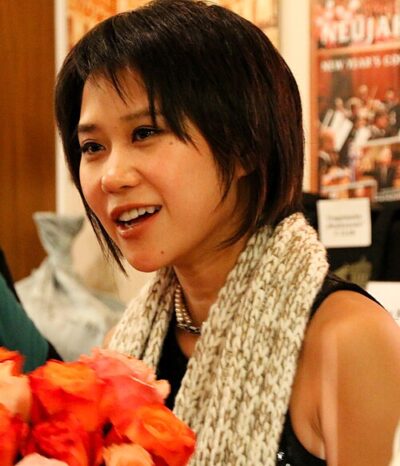
Yuja Wang
Yuja Wang is a Chinese pianist. Born February 10, 1987, in Beijing. Educated at Central Conservatory of Music and Curtis Institute of Music. Awards include Steinway artist.
Facts
14 facts · 1 confirmed by two sources · 5 cited · 8 from one source
Where this comes from
Papalocal keeps its own record. It started from these sources; what each one said is kept here as it was copied, so a change on their side never changes this page by itself. Tap one to read its version.
What Wikidata says · copied November 15, 2026 · revision 2568219262
- Described as
- Chinese pianist
- Other names
- Wang Yujia
- Born
- February 10, 1987 · 2 references
- Born in
- Beijing · 1 reference
- Citizen of
- United States · 1 reference
- Occupation
- pianist · 1 reference; musician · 1 reference
- Education
- Central Conservatory of Music; Curtis Institute of Music (2002–2008); Mount Royal University (2001–)
- Genre
- classical music · 1 reference
- Instrument
- piano
- Record label
- Deutsche Grammophon · 1 reference
- Awards
- Steinway artist · 1 reference
- Lived in
- New York City
- Website
- https://yujawang.com/
- Wikipedias with a page
- 31
Wikidata item Q465311 (wikidata.org/wiki/Q465311), public domain (CC0). Copied November 15, 2026.
What Wikipedia says · copied November 15, 2026 · revision 1383318495
Yuja Wang (Chinese: 王羽佳; pinyin: Wáng Yǔjiā; born February 10, 1987) is a Chinese-born American pianist. She began learning piano at the age of six, and went on to study at the Central Conservatory of Music in Beijing and the Curtis Institute of Music in Philadelphia.
By age 21, she was already an internationally recognized concert pianist and signed an exclusive contract with Deutsche Grammophon. Wang currently lives in New York City.
- Born, in its opening lines
- February 10, 1987
From the Wikipedia article “Yuja Wang” (en.wikipedia.org/wiki/Yuja_Wang), by its contributors, under CC BY-SA 4.0 (creativecommons.org/licenses/by-sa/4.0/). Copied November 15, 2026; not changed.
Confirmed Two sources agree. Cited One source, and it names where it got it. One source One source, without a reference of its own. Sources disagree The sources disagree. We show the best-supported value and keep theirs below.
