
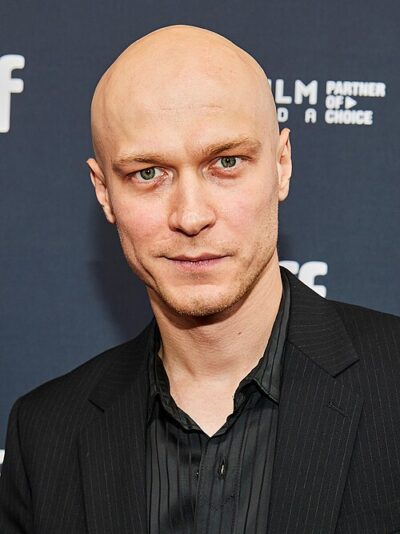
Yura Borisov
Yura Borisov is a Russian actor. Born December 8, 1992, in Reutov. Educated at M.S. Schepkin Higher Theatre School. Awards include Golden Leaf and Golden Eagle Awards.
Facts
7 facts · 1 confirmed by two sources · 2 cited · 4 from one source
Where this comes from
Papalocal keeps its own record. It started from these sources; what each one said is kept here as it was copied, so a change on their side never changes this page by itself. Tap one to read its version.
What Wikidata says · copied November 16, 2026 · revision 2567530242
- Described as
- Russian actor (born 1992)
- Other names
- Yuri Borisov, Yuriy Borisov, Yury Aleksandrovich Borisov, Yury Borisov, Jura Borisov
- Born
- December 8, 1992 · 2 references
- Born in
- Reutov · 2 references
- Citizen of
- Russia · 1 reference
- Occupation
- actor · 3 references
- Education
- M.S. Schepkin Higher Theatre School
- Awards
- Golden Leaf · 1 reference; Golden Eagle Awards
- Wikipedias with a page
- 35
Wikidata item Q24035944 (wikidata.org/wiki/Q24035944), public domain (CC0). Copied November 16, 2026.
What Wikipedia says · copied November 16, 2026 · revision 1381987914
Yuri Alexandrovich Borisov (born 8 December 1992), better known by the diminutive Yura, is a Russian actor. He made his acting debut in the crime drama Elena (2011) and then won a Golden Eagle Award for his portrayal of Mikhail Kalashnikov in the biopic AK-47 (2020). He also starred in the films The Bull (2019), The Silver Skates (2020), Compartment No. 6 (2021), and Captain Volkonogov Escaped (2021). For his international breakthrough performance in the American film Anora (2024), he was nominated for several awards, including the Academy Award for Best Supporting Actor.
- Born, in its opening lines
- December 8, 1992
From the Wikipedia article “Yura Borisov” (en.wikipedia.org/wiki/Yura_Borisov), by its contributors, under CC BY-SA 4.0 (creativecommons.org/licenses/by-sa/4.0/). Copied November 16, 2026; not changed.
Confirmed Two sources agree. Cited One source, and it names where it got it. One source One source, without a reference of its own. Sources disagree The sources disagree. We show the best-supported value and keep theirs below.
