
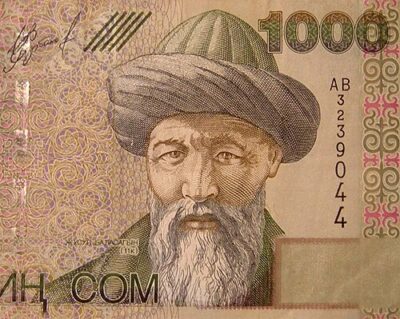
Yusuf Khass Hajib
Yusuf Khass Hajib was a Turkic poet. Born 1017, in Balasagun. Died 1075, in Kashgar.
Facts
8 facts · 0 confirmed by two sources · 0 cited · 6 from one source · 2 where the sources disagree
What’s different
- Born: we show 1017 (Sources disagree). Wikidata also lists 1019
- Died: we show 1075 (Sources disagree). Wikidata also lists 1077
Where this comes from
Papalocal keeps its own record. It started from these sources; what each one said is kept here as it was copied, so a change on their side never changes this page by itself. Tap one to read its version.
What Wikidata says · copied November 16, 2026 · revision 2547403431
- Described as
- Turkic poet
- Born
- 1019; 1017 · 1 reference
- Died
- 1077; 1075 · 1 reference
- Born in
- Balasagun
- Died in
- Kashgar
- Buried in
- Mausoleum of Yusuf Khass Hajib
- Citizen of
- Karakhanid Khanate · 1 reference
- Occupation
- poet
- Religion
- Islam
- Wikipedias with a page
- 34
Wikidata item Q934585 (wikidata.org/wiki/Q934585), public domain (CC0). Copied November 16, 2026.
What Wikipedia says · copied November 16, 2026 · revision 1362560326
Yusuf Khass Hajib was an 11th-century Central Asian Turkic poet, statesman, vizier, Maturidi theologian and philosopher from the city of Balasaghun, the capital of the Kara-Khanid Khanate in modern-day Kyrgyzstan. He wrote the Kutadgu Bilig and most of what is known about him, comes from his own writings in this work. He is mostly referred to as Yūsuf Balasaguni, derived from his city of origin.
From the Wikipedia article “Yūsuf Balasaguni” (en.wikipedia.org/wiki/Yūsuf_Balasaguni), by its contributors, under CC BY-SA 4.0 (creativecommons.org/licenses/by-sa/4.0/). Copied November 16, 2026; not changed.
Confirmed Two sources agree. Cited One source, and it names where it got it. One source One source, without a reference of its own. Sources disagree The sources disagree. We show the best-supported value and keep theirs below.
