
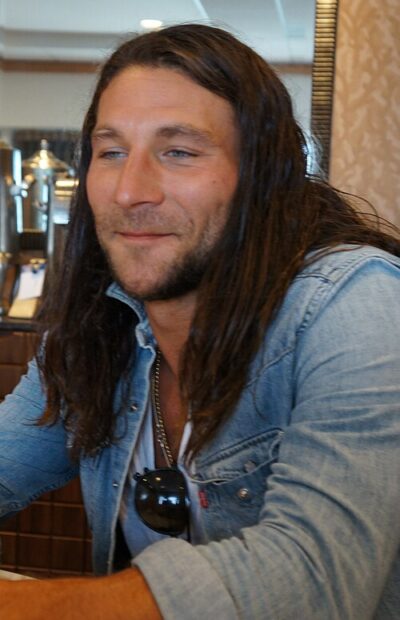
Zach McGowan
Zach McGowan is an American actor. Born May 5, 1980, in New York City. Educated at Carleton College and Ethical Culture Fieldston School.
Facts
11 facts · 0 confirmed by two sources · 0 cited · 10 from one source · 1 where the sources disagree
What’s different
- Born: we show May 5, 1980 (Sources disagree). Wikidata also lists May 5, 1981
Where this comes from
Papalocal keeps its own record. It started from these sources; what each one said is kept here as it was copied, so a change on their side never changes this page by itself. Tap one to read its version.
What Wikidata says · copied November 16, 2026 · revision 2539220111
- Described as
- American actor
- Born
- May 5, 1981; May 5, 1980 · 1 reference
- Born in
- New York City
- Citizen of
- United States
- Occupation
- stage actor; film actor; television actor; voice actor
- Education
- Carleton College (2002); Ethical Culture Fieldston School · 1 reference
- Lived in
- Los Angeles
- Website
- http://www.ZachMcGowan.com
- Wikipedias with a page
- 21
Wikidata item Q8063820 (wikidata.org/wiki/Q8063820), public domain (CC0). Copied November 16, 2026.
What Wikipedia says · copied November 16, 2026 · revision 1377740688
Zach McGowan is an American film, television and voice actor. He is known for his roles in television series The Boys and Gen V as Dogknott, Agents of S.H.I.E.L.D. as Anton Ivanov / The Superior, Shameless,
Black Sails, and The 100. Other highlights include parts in the films Terminator Salvation, The Hunt for Eagle One, the sequel The Hunt for Eagle One: Crash Point and The Scorpion King: Book of Souls. He guest-starred in the television series Numbers, CSI: Miami, and Cold Case, with voice-over work for the Scream Awards, Animal Planet and the video games Tom Clancy's Ghost Recon: Future Soldier, Resident Evil 6, and Iron Man.
From the Wikipedia article “Zach McGowan” (en.wikipedia.org/wiki/Zach_McGowan), by its contributors, under CC BY-SA 4.0 (creativecommons.org/licenses/by-sa/4.0/). Copied November 16, 2026; not changed.
Confirmed Two sources agree. Cited One source, and it names where it got it. One source One source, without a reference of its own. Sources disagree The sources disagree. We show the best-supported value and keep theirs below.
