
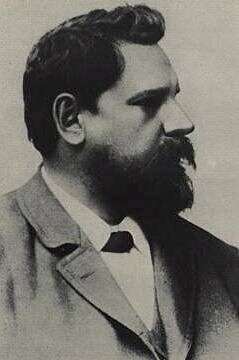
Zdeněk Fibich
Zdeněk Fibich was a Czech conductor, music educator, composer and choirmaster. Born December 21, 1850, in Všebořice. Died October 15, 1900, in New Town. Known for The Tempest, Šárka and The Bride of Messina. Educated at University of Music and Theatre Leipzig. Awards include honorary citizen of Moravské Budějovice.
Facts
23 facts · 2 confirmed by two sources · 9 cited · 12 from one source
Where this comes from
Papalocal keeps its own record. It started from these sources; what each one said is kept here as it was copied, so a change on their side never changes this page by itself. Tap one to read its version.
What Wikidata says · copied November 17, 2026 · revision 2568852199
- Described as
- Czech conductor, music educator, composer and choirmaster (1850-1900)
- Other names
- Zdenko Antonín Václav Fibich
- Born
- December 21, 1850 · 18 references
- Died
- October 15, 1900 · 19 references
- Born in
- Všebořice · 2 references
- Died in
- New Town · 1 reference
- Buried in
- Vyšehrad cemetery · 2 references
- Cause of death
- pneumonia
- Citizen of
- Austria–Hungary
- Occupation
- composer · 6 references; pedagogue; conductor · 4 references; musicologist; dramaturge · 2 references; choir director · 1 reference
- Education
- University of Music and Theatre Leipzig (1865–1866)
- Genre
- opera; symphony; classical music
- Instrument
- organ
- Known for
- The Tempest; Šárka; The Bride of Messina
- Awards
- honorary citizen of Moravské Budějovice (1884) · 2 references
- Spouse
- Betty Fibichová · 1 reference
- Wikipedias with a page
- 26
Wikidata item Q117110 (wikidata.org/wiki/Q117110), public domain (CC0). Copied November 17, 2026.
What Wikipedia says · copied November 17, 2026 · revision 1383763432
Zdeněk Fibich (Czech pronunciation: [ˈzdɛɲɛk ˈfɪbɪx], 21 December 1850 in Všebořice – 15 October 1900 in Prague) was a Czech composer of classical music. Among his compositions are chamber works (including two string quartets, a piano trio, piano quartet and a quintet for piano, strings and winds), symphonic poems, three symphonies, at least seven operas (the most famous probably Šárka and The Bride of Messina), melodramas including the substantial trilogy Hippodamia, liturgical music including a mass – a missa brevis; and a large cycle (a total of 376 pieces, from the 1890s) of piano works called Moods, Impressions, and Reminiscences. The piano cycle served as a diary of sorts of his love for a piano pupil, and one of the pieces formed the basis for the short instrumental work Poème, for which Fibich is best remembered today.
- Born, in its opening lines
- December 21, 1850
- Died, in its opening lines
- October 15, 1900
From the Wikipedia article “Zdeněk Fibich” (en.wikipedia.org/wiki/Zdeněk_Fibich), by its contributors, under CC BY-SA 4.0 (creativecommons.org/licenses/by-sa/4.0/). Copied November 17, 2026; not changed.
Confirmed Two sources agree. Cited One source, and it names where it got it. One source One source, without a reference of its own. Sources disagree The sources disagree. We show the best-supported value and keep theirs below.
