
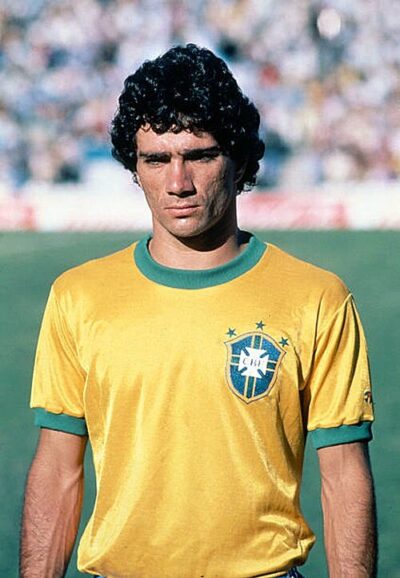
Zé Sérgio is a Brazilian association football player and manager. Born March 8, 1957, in São Paulo. Teams include Santos F.C. (1984–1986), São Paulo FC (1976–1984) and Brazil men's national football team (1978–1981).
Facts
13 facts · 1 confirmed by two sources · 2 cited · 10 from one source
Where this comes from
Papalocal keeps its own record. It started from these sources; what each one said is kept here as it was copied, so a change on their side never changes this page by itself. Tap one to read its version.
What Wikidata says · copied November 16, 2026 · revision 2548348076
- Described as
- Brazilian association football player and manager
- Other names
- Ze Sergio, José Sérgio Presti
- Born
- March 8, 1957 · 1 reference
- Born in
- São Paulo
- Citizen of
- Brazil
- Occupation
- association football player · 1 reference; association football coach · 1 reference
- Teams
- Santos F.C. (1984–1986); São Paulo FC (1976–1984); Brazil men's national football team (1978–1981); CR Vasco da Gama (1986–1987); Kashiwa Reysol (1988–1991)
- Sport
- association football
- Children
- Thaissa Presti · 1 reference
- Height
- 1.73 m (5 ft 8 in)
- Wikipedias with a page
- 43
Wikidata item Q247497 (wikidata.org/wiki/Q247497), public domain (CC0). Copied November 16, 2026.
What Wikipedia says · copied November 16, 2026 · revision 1382508243
José Sérgio Presti (born March 8, 1957, in São Paulo), mainly known as Zé Sérgio, is a Brazilian former football player who played as a striker.
Zé Sérgio was brought to São Paulo's youth academy by his cousin, Rivellino. He won the Campeonato Paulista with Santos in 1984 before going on to play for Vasco da Gama and Japanese club Hitachi, where he retired. He has been described as one of the most talented dribblers in Brazil during the 70s and 80s.
- Born, in its opening lines
- March 8, 1957
From the Wikipedia article “Zé Sérgio” (en.wikipedia.org/wiki/Zé_Sérgio), by its contributors, under CC BY-SA 4.0 (creativecommons.org/licenses/by-sa/4.0/). Copied November 16, 2026; not changed.
Confirmed Two sources agree. Cited One source, and it names where it got it. One source One source, without a reference of its own. Sources disagree The sources disagree. We show the best-supported value and keep theirs below.
