
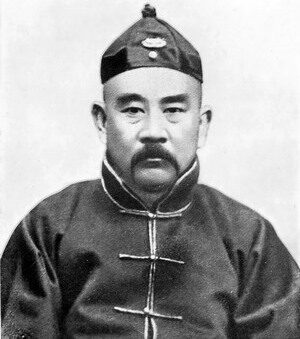
Zhang Xun
Zhang Xun was a Chinese general. Born September 16, 1854, in Fengxin County. Died September 11, 1923, in Tianjin. Positions held include Viceroy of Liangjiang.
Facts
12 facts · 2 confirmed by two sources · 3 cited · 7 from one source
Where this comes from
Papalocal keeps its own record. It started from these sources; what each one said is kept here as it was copied, so a change on their side never changes this page by itself. Tap one to read its version.
What Wikidata says · copied November 18, 2026 · revision 2516509808
- Described as
- Chinese general (1854-1923)
- Other names
- shun sheng zhe, song shou lao ren, zhong wu, shao xuan, yu zhi, zhang xi zan, zhang xun, sheng sheng, Shaoxuan
- Born
- September 16, 1854 · 1 reference
- Died
- September 11, 1923 · 1 reference
- Born in
- Fengxin County
- Died in
- Tianjin
- Citizen of
- Qing dynasty; Republic of China · 1 reference
- Occupation
- politician · 1 reference
- Positions held
- Viceroy of Liangjiang
- Political party
- Royalist Party · 1 reference
- Military branch
- Beiyang Army · 1 reference
- Military rank
- admiral; general · 1 reference
- Wikipedias with a page
- 23
Wikidata item Q699600 (wikidata.org/wiki/Q699600), public domain (CC0). Copied November 18, 2026.
What Wikipedia says · copied November 18, 2026 · revision 1377785970
Zhang Xun (Chinese: 張勳; pinyin: Zhāng Xūn; Wade–Giles: Chang¹ Hsün¹; September 16, 1854 – September 11, 1923), courtesy name Shaoxuan (少軒), art name Songshou Laoren (松壽老人), nickname Bianshuai (辮帥, lit. 'marshal with queue'), was a Chinese general and Qing loyalist who attempted to restore the abdicated emperor Puyi in the Manchu Restoration of 1917. He also supported Yuan Shikai during his time as president.
- Born, in its opening lines
- September 16, 1854
- Died, in its opening lines
- September 11, 1923
From the Wikipedia article “Zhang Xun” (en.wikipedia.org/wiki/Zhang_Xun), by its contributors, under CC BY-SA 4.0 (creativecommons.org/licenses/by-sa/4.0/). Copied November 18, 2026; not changed.
Confirmed Two sources agree. Cited One source, and it names where it got it. One source One source, without a reference of its own. Sources disagree The sources disagree. We show the best-supported value and keep theirs below.
