
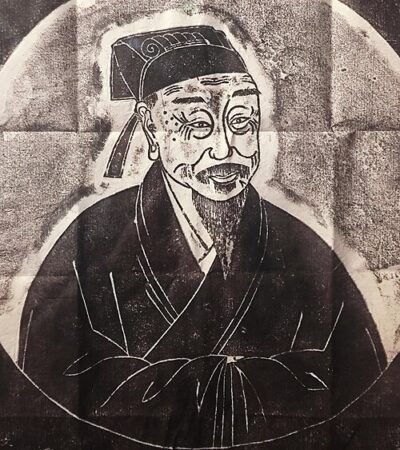
Zhu Xi
Zhu Xi was a Chinese historian, neo-Confucian philosopher, poet, and politician during the Song dynasty. Born October 18, 1130, in Youxi County. Died April 23, 1200, in People's Republic of China. Known for Zizhi Tongjian Gangmu, Zhu Xi’s Commentary on the Cantong Qi and Four Books in Chapter and Verse with Collected Commentaries.
Facts
22 facts · 2 confirmed by two sources · 7 cited · 13 from one source
Where this comes from
Papalocal keeps its own record. It started from these sources; what each one said is kept here as it was copied, so a change on their side never changes this page by itself. Tap one to read its version.
What Wikidata says · copied November 16, 2026 · revision 2565981536
- Described as
- Chinese historian, neo-Confucian philosopher, poet, and politician during the Song dynasty (1130–1200)
- Other names
- Wen, Diwuyi, Yuanhui, Shenlang, Jiyan, Youlang, Dunweng, Wengong, Ziyang, Zhonghui, Kaoting, Huiweng
- Born
- October 18, 1130 · 1 reference
- Died
- April 23, 1200 · 1 reference
- Born in
- Youxi County
- Died in
- People's Republic of China · 1 reference
- Buried in
- Zhu Xi's tomb
- Citizen of
- Song dynasty
- Occupation
- poet · 1 reference; writer; philosopher · 2 references; historian · 1 reference; composer
- Known for
- Zizhi Tongjian Gangmu; Zhu Xi’s Commentary on the Cantong Qi; Four Books in Chapter and Verse with Collected Commentaries
- Field
- philosophy
- Spouse
- Liu Shi · 1 reference
- Children
- Zhu Shu · 1 reference; Zhu Ye · 1 reference; Zhu Zai
- Father
- Zhu Song · 1 reference
- Mother
- Zhu Shi · 1 reference
- Religion
- Confucianism
- Wikipedias with a page
- 131
Wikidata item Q9397 (wikidata.org/wiki/Q9397), public domain (CC0). Copied November 16, 2026.
What Wikipedia says · copied November 16, 2026 · revision 1377078155
Zhu Xi (Chinese: 朱熹; [ʈʂú ɕí]; October 18, 1130 – April 23, 1200), formerly romanized Chu Hsi, was a Chinese philosopher, historian, politician, poet, and calligrapher of the Southern Song dynasty. As a leading figure in the development of Neo-Confucianism, Zhu Xi played a pivotal role in shaping the intellectual foundations of later imperial China. He sought to integrate moral self-cultivation, classical interpretation, ritual practice, and cosmological theory into a coherent framework, emphasizing disciplined study and ethical cultivation while criticizing approaches—particularly within contemporary Buddhist traditions—that claimed immediate insight detached from ritual, learning, and moral practice. His extensive commentaries and editorial work on the Four Books became the core texts of the imperial civil service examinations from 1313 until their abolition in 1905. He advanced a rigorous philosophical methodology known as the "investigation of things" (格物) and emphasized meditation as an essential practice for moral and intellectual self-cultivation. Zhu Xi's thought exerted profound influence, becoming the official state ideology of China from the Yuan dynasty onward, and was later adopted in other East Asian countries such as Japan, Korea, and Vietnam. In these regions, his Neo-Confucian doctrines were institutionalized through educational systems and civil service examinations, shaping political ideologies, social hierarchies, and cultural values for centuries.
Zhu was a scholar with a wide learning in the classics, commentaries, histories and other writings of his predecessors. In his lifetime, he was able to serve multiple times as a government official, although he avoided public office for most of his adult life. He also wrote, compiled and edited almost a hundred books and corresponded with dozens of other scholars. He acted as a teacher to groups of students, many of whom chose to study under him for years. He built upon the teachings of the Cheng brothers and others, further developing their metaphysical theories in regards to Li (Forma) and Qi (Materia). His followers recorded thousands of his conversations in writing.
- Born, in its opening lines
- October 18, 1130
- Died, in its opening lines
- April 23, 1200
From the Wikipedia article “Zhu Xi” (en.wikipedia.org/wiki/Zhu_Xi), by its contributors, under CC BY-SA 4.0 (creativecommons.org/licenses/by-sa/4.0/). Copied November 16, 2026; not changed.
Confirmed Two sources agree. Cited One source, and it names where it got it. One source One source, without a reference of its own. Sources disagree The sources disagree. We show the best-supported value and keep theirs below.
