
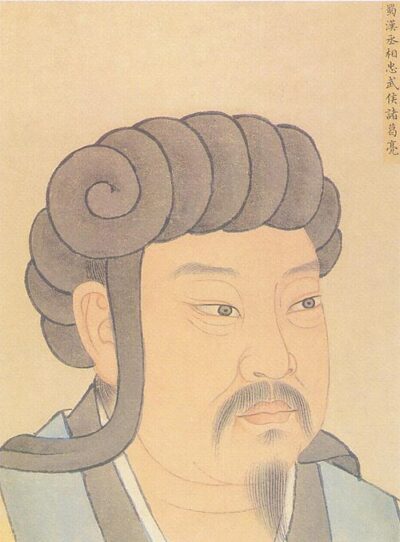
Zhuge Liang
Zhuge Liang was a Chinese statesman and military strategist. Born 181, in Yinan County. Died August 23, 234, in Qishan County. Positions held include Grand Chancellor of China (221–234).
Facts
20 facts · 1 confirmed by two sources · 1 cited · 17 from one source · 1 where the sources disagree
What’s different
- Died: we show August 23, 234 (Sources disagree). Wikipedia says October 8, 234
Where this comes from
Papalocal keeps its own record. It started from these sources; what each one said is kept here as it was copied, so a change on their side never changes this page by itself. Tap one to read its version.
What Wikidata says · copied November 16, 2026 · revision 2557106768
- Described as
- Chinese statesman and military strategist (181–234)
- Other names
- Zhuge Kongming
- Born
- 181 · 10 references
- Died
- August 23, 234 · 1 reference
- Born in
- Yinan County
- Died in
- Qishan County
- Buried in
- Mount Dingjun · 1 reference
- Citizen of
- Shu Han · 1 reference
- Occupation
- military engineer; inventor; politician; strategist; engineer
- Positions held
- Grand Chancellor of China (221–234)
- Spouse
- Huang Yueying
- Children
- Zhuge Zhan; Zhuge Qiao; Zhuge Guo · 1 reference; Zhuge Huai
- Father
- Zhuge Gui
- Siblings
- Zhuge Jun; Zhuge Jin
- Wikipedias with a page
- 59
Wikidata item Q198211 (wikidata.org/wiki/Q198211), public domain (CC0). Copied November 16, 2026.
What Wikipedia says · copied November 16, 2026 · revision 1385658033
Zhuge Liang () (23 July 181 AD – 8 October 234 AD), courtesy name Kongming, was a Chinese statesman and strategist who lived through the collapse of the Eastern Han dynasty and became the principal architect of the Shu Han state. He served as chancellor under its founding emperor Liu Bei from 221 and as regent to the young emperor Liu Shan after 223 until his death.
Orphaned early, Zhuge Liang followed his uncle to Jing Province and later lived in seclusion at Longzhong, where his intellect and ambitions earned him the sobriquet "Sleeping Dragon". Liu Bei sought him out three times, after which Zhuge Liang proposed the Longzhong Plan: securing Jing and Yi provinces, allying with Eastern Wu, and resisting Cao Wei. He subsequently served as Liu Bei's chief strategist and played a key role in the alliance that led to Cao Cao's defeat at the Battle of Red Cliffs.
After helping found Shu Han, Zhuge Liang exercised near-total authority over both civil and military affairs. He governed with strict discipline and clear laws, emphasizing meritocratic appointments, agricultural development, and administrative integrity. His political thought blended Confucianism with Legalism, advocating benevolence alongside firm institutions and impartial rewards and punishments. Militarily, he pacified the southwest and led repeated northern expeditions against Cao Wei, including the Battle of Mount Qi. His Chu Shi Biao, an address of loyalty and statecraft to Liu Shan, is regarded as a masterpiece of Chinese prose.
Zhuge Liang died in 234 at the Wuzhang Plains while on campaign and was posthumously honored as Marquis Zhongwu. His legacy was immortalized in the 14th-century novel Romance of the Three Kingdoms, which portrays him as a near-sage embodiment of wisdom and loyalty.
- Born, in its opening lines
- July 23, 181
- Died, in its opening lines
- October 8, 234
From the Wikipedia article “Zhuge Liang” (en.wikipedia.org/wiki/Zhuge_Liang), by its contributors, under CC BY-SA 4.0 (creativecommons.org/licenses/by-sa/4.0/). Copied November 16, 2026; not changed.
Confirmed Two sources agree. Cited One source, and it names where it got it. One source One source, without a reference of its own. Sources disagree The sources disagree. We show the best-supported value and keep theirs below.
