
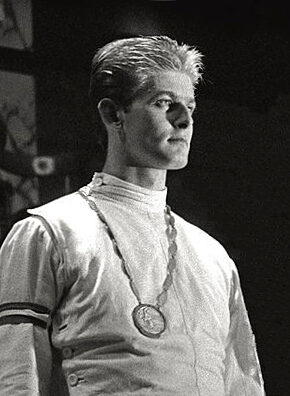
Zoltán Horváth was a Hungarian sabre fencer. Born March 12, 1937, in Balatonfüred. Died June 12, 2025, in Budapest. Awards include honorary citizen of Balatonfüred.
Facts
11 facts · 2 confirmed by two sources · 1 cited · 8 from one source
Where this comes from
Papalocal keeps its own record. It started from these sources; what each one said is kept here as it was copied, so a change on their side never changes this page by itself. Tap one to read its version.
What Wikidata says · copied November 17, 2026 · revision 2546039463
- Described as
- Hungarian sabre fencer
- Other names
- Zoltan Horvath
- Born
- March 12, 1937
- Died
- June 12, 2025 · 1 reference
- Born in
- Balatonfüred
- Died in
- Budapest · 1 reference
- Buried in
- Farkasréti Cemetery
- Citizen of
- Hungary
- Occupation
- fencer; coach
- Sport
- fencing
- Awards
- honorary citizen of Balatonfüred (2012)
- Height
- 1.83 m (6 ft 0 in)
- Wikipedias with a page
- 26
Wikidata item Q717916 (wikidata.org/wiki/Q717916), public domain (CC0). Copied November 17, 2026.
What Wikipedia says · copied November 17, 2026 · revision 1362182239
Zoltán Horváth (12 March 1937 – 12 June 2025) was a Hungarian sabre fencer. At the 1960 Olympics, he won the gold medal in the team competition, and the individual silver medal behind teammate Rudolf Kárpáti. Horváth also took part in the 1964 Olympics, placing fifth in the team competition.
At world championships, his greatest success came in 1962, when he won the individual competition and placed second with the team. Horváth had already won two gold medals in the team competitions of the 1957 and 1958 world championships and gained a third in 1966.
Horváth died on 12 June 2025 in Budapest, at the age of 88.
- Born, in its opening lines
- March 12, 1937
- Died, in its opening lines
- June 12, 2025
From the Wikipedia article “Zoltán Horváth (fencer)” (en.wikipedia.org/wiki/Zoltán_Horváth_(fencer)), by its contributors, under CC BY-SA 4.0 (creativecommons.org/licenses/by-sa/4.0/). Copied November 17, 2026; not changed.
Confirmed Two sources agree. Cited One source, and it names where it got it. One source One source, without a reference of its own. Sources disagree The sources disagree. We show the best-supported value and keep theirs below.
