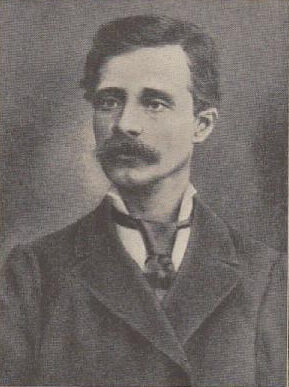
1762 leto
1762 leto is a 1870 song. It was written by Grigor Parlichev.
- Released
- 1870s
- Written by
- Grigor Parlichev
All 4 facts, and where they come from
Facts
4 facts · 0 confirmed by two sources · 0 cited · 4 from one source
Where this comes from
Papalocal keeps its own record. It started from these sources; what each one said is kept here as it was copied, so a change on their side never changes this page by itself. Tap one to read its version.
What Wikidata says · copied November 19, 2026 · revision 2571106156
- Described as
- 1870 song
- What it is
- musical work/composition
- Written by
- Grigor Parlichev
- Released
- 1870s
- Language
- Bulgarian
- Wikipedias with a page
- 4
Wikidata item Q16820307 (wikidata.org/wiki/Q16820307), public domain (CC0). Copied 2026-11-19.
What Wikipedia says · copied November 19, 2026 · revision 1365353847
"1762 leto" (Bulgarian: 1762 лето [xiˈʎada i sɛdɛmˈstɔtin ˈʃɛstdɛsɛt i ˈftɔro ˈlɛto] or Песен за унищожението на Охридската патриаршия; Macedonian: 1762 лето [ilˈjada i sɛdɛmˈstɔtin ˈʃɛɛsɛt i ˈftɔrɔ ˈlɛtɔ] or Песна за патрикот, English: The year of 1762) is a song written by Grigor Parlichev, a Bulgarian writer.
The song describes the abolition of the Archbishopric of Ohrid, which took place in 1767, and the departure of its last archbishop Arsenius II from Ohrid. It was very popular in Macedonia, and especially in Ohrid, in the last decades of the nineteenth century. It was first performed in Ohrid shortly after Parlichev's wedding c. 1870. According to Parlichev and other contemporaries, the song contributed more to the final victory of the Bulgarian national movement in Macedonia against the Ecumenical Patriarchate of Constantinople than many of the previous efforts of the Bulgarians.
The text of the song with minor changes was published for the first time by Vasil Kanchov in Sofia in 1891. The song was originally published in the Bulgarian periodical science magazine "Collection of folklore, science and literature" in Sofia, Bulgaria (1894).
In 1953 the song was translated and published for the first time in Macedonian by Todor Dimitrovski in "Avtobiografija; Serdarot, Skopje, 1953, Kočo Racin", to mark the 60th anniversary of his death. Two popular Macedonian recordings of the song are by Ansambl Biljana in 1974 and Mizar in 1991. The Mizar rendition of the song is based in a darkwave style.
From the Wikipedia article “1762 leto” (en.wikipedia.org/wiki/1762_leto), by its contributors, under CC BY-SA 4.0 (creativecommons.org/licenses/by-sa/4.0/). Copied 2026-11-19; not changed.
Confirmed Two sources agree. Cited One source, and it names where it got it. One source One source, without a reference of its own. Sources disagree The sources disagree. We show the best-supported value and keep theirs below.