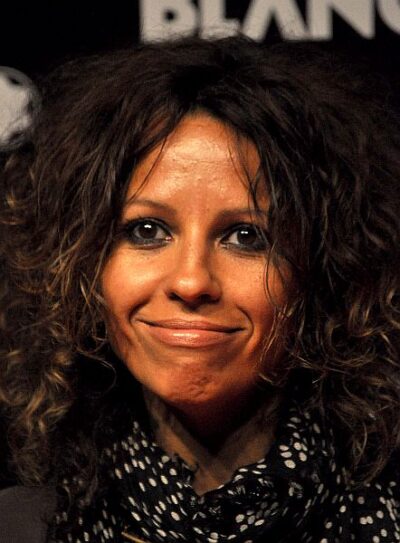
4 Non Blondes
4 Non Blondes is a musical group. It was founded in 1989.
- Founded
- 1989
- Genre
- alternative rock
- Record label
- Interscope Records
- Country of origin
- United States
All 7 facts, and where they come from
Facts
7 facts · 0 confirmed by two sources · 1 cited · 6 from one source
Where this comes from
Papalocal keeps its own record. It started from these sources; what each one said is kept here as it was copied, so a change on their side never changes this page by itself. Tap one to read its version.
What Wikidata says · copied November 17, 2026 · revision 2563763514
- Described as
- band
- What it is
- musical group
- Genre
- alternative rock
- Country of origin
- United States
- Record label
- Interscope Records; Atlantic Records
- Founded
- 1989
- Official website
- http://www.fournonblondes.com/ · 1 reference
- Wikipedias with a page
- 34
Wikidata item Q238263 (wikidata.org/wiki/Q238263), public domain (CC0). Copied 2026-11-17.
What Wikipedia says · copied November 17, 2026 · revision 1381707210
4 Non Blondes is an American rock band formed in San Francisco in 1989. Their lineup comprises Linda Perry (guitars, vocals), Christa Hillhouse (bass), Dawn Richardson (drums) and Roger Rocha (guitar); founding members Shaunna Hall (guitar) and Wanda Day (drums) were previously in the band.
4 Non Blondes's debut album, Bigger, Better, Faster, More! (1992), spent 59 weeks on the US Billboard 200 and sold over six million copies worldwide. Its single "What's Up?" reached number 14 on the US Billboard Hot 100 and topped twelve international charts, becoming the band's signature song. Perry left the band in 1994, and the remaining members disbanded shortly afterward. They reformed for a one-off gig in 2014, and announced a long-term reunion with new shows and music in 2025.
From the Wikipedia article “4 Non Blondes” (en.wikipedia.org/wiki/4_Non_Blondes), by its contributors, under CC BY-SA 4.0 (creativecommons.org/licenses/by-sa/4.0/). Copied 2026-11-17; not changed.
Confirmed Two sources agree. Cited One source, and it names where it got it. One source One source, without a reference of its own. Sources disagree The sources disagree. We show the best-supported value and keep theirs below.
Picture: Wikimedia Commons: Sara Gilbert and Linda Perry 2014.jpg · See Commons file page