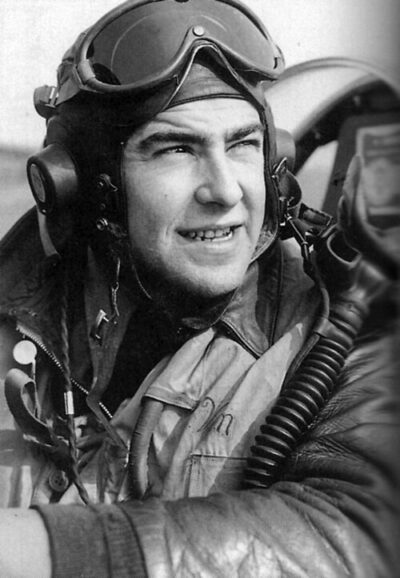
4th Fighter Group (United States Army Air Forces)
4th Fighter Group (United States Army Air Forces) is a fighter group of the United States Army Air Forces. It was founded in 1942.
- Founded
- August 22, 1942
- Country
- United States
All 7 facts, and where they come from
Facts
7 facts · 0 confirmed by two sources · 0 cited · 7 from one source
Where this comes from
Papalocal keeps its own record. It started from these sources; what each one said is kept here as it was copied, so a change on their side never changes this page by itself. Tap one to read its version.
What Wikidata says · copied November 21, 2026 · revision 2318095411
- Described as
- fighter group of the United States Army Air Forces
- Other names
- 4th Fighter Group, Debden Eagles
- What it is
- military unit
- Founded
- August 22, 1942
- Ended
- November 10, 1945
- Country
- United States · 1 reference
- Part of
- VIII Fighter Command
- Also called
- The Eagles; Debden Eagles
- Wikipedias with a page
- 3
Wikidata item Q53679620 (wikidata.org/wiki/Q53679620), public domain (CC0). Copied 2026-11-21.
What Wikipedia says · copied November 21, 2026 · revision 1342075483
The 4th Fighter Group was an American element of the United States Army Air Forces (USAAF) Eighth Air Force during World War II. The group was known as the Debden Eagles because it was created from the three Eagle Squadrons of the Royal Air Force: No. 71, No. 121 Squadron RAF, and No. 133 Squadron RAF. These squadrons became the 334th, 335th, and 336th Fighter Squadrons of the 4th Fighter Group based at RAF Debden. The group was the first fighter group to fly combat missions over German airspace, one of the first to escort bombers over Berlin, and the first selected to escort bombers on shuttle bombing runs landing in Russia. The group was credited with shooting down 1,016 German planes.
From the Wikipedia article “4th Fighter Group” (en.wikipedia.org/wiki/4th_Fighter_Group), by its contributors, under CC BY-SA 4.0 (creativecommons.org/licenses/by-sa/4.0/). Copied 2026-11-21; not changed.
Confirmed Two sources agree. Cited One source, and it names where it got it. One source One source, without a reference of its own. Sources disagree The sources disagree. We show the best-supported value and keep theirs below.
Picture: Wikimedia Commons: DGentile.jpg · See Commons file page