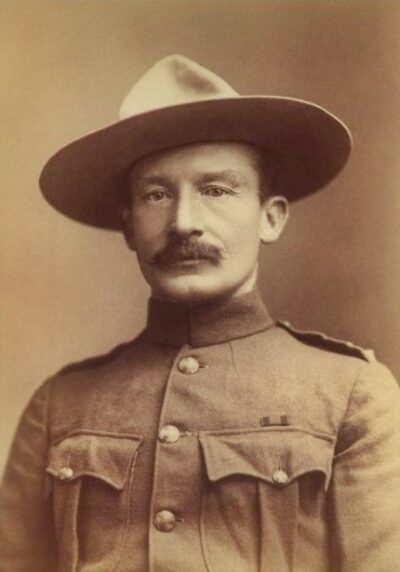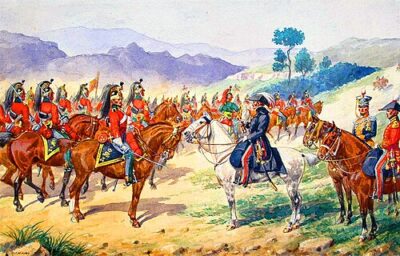
5th Dragoon Guards
5th Dragoon Guards is a military unit. It was founded in 1685.
- Founded
- 1685
All 5 facts, and where they come from
Facts
5 facts · 0 confirmed by two sources · 0 cited · 5 from one source
Where this comes from
Papalocal keeps its own record. It started from these sources; what each one said is kept here as it was copied, so a change on their side never changes this page by itself. Tap one to read its version.
What Wikidata says · copied November 17, 2026 · revision 2469094413
- Described as
- military unit
- What it is
- military unit
- Founded
- 1685 · 1 reference
- Ended
- 1922
- Country
- United Kingdom (2 times) (1685–1922); Ireland (1698–1800)
- Wikipedias with a page
- 4
Wikidata item Q4641288 (wikidata.org/wiki/Q4641288), public domain (CC0). Copied 2026-11-17.
What Wikipedia says · copied November 17, 2026 · revision 1385095312
The 5th (Princess Charlotte of Wales's) Dragoon Guards was a British army cavalry regiment, officially raised in January 1686 as Shrewsbury's Regiment of Horse or the Earl of Shrewsbury's Horse.
By 1687, it was known as Langsdale's Horse, from 1687 to 1688 as Hamilton's Horse, then from 1688 to 1691 as John Coy's Horse. In 1691, it was given a number and known as the 6th Horse. In 1697 the regiment was known as Arran's Horse and later became Cadogan's Horse.
As Coy's Horse, the regiment fought at the Battle of the Boyne. In 1804 it became the 5th (Princess Charlotte of Wales's) Regiment of Dragoon Guards.
In 1922, the regiment was amalgamated with the 6th (Inniskilling) Dragoons to form the 5th/6th Dragoons. Its history and traditions continue today in the Royal Dragoon Guards, an armoured cavalry unit of the British Army.
From the Wikipedia article “5th Dragoon Guards” (en.wikipedia.org/wiki/5th_Dragoon_Guards), by its contributors, under CC BY-SA 4.0 (creativecommons.org/licenses/by-sa/4.0/). Copied 2026-11-17; not changed.
Confirmed Two sources agree. Cited One source, and it names where it got it. One source One source, without a reference of its own. Sources disagree The sources disagree. We show the best-supported value and keep theirs below.
Picture: Richard Simkin, via Wikimedia Commons · Public domain