A Century of Dishonor
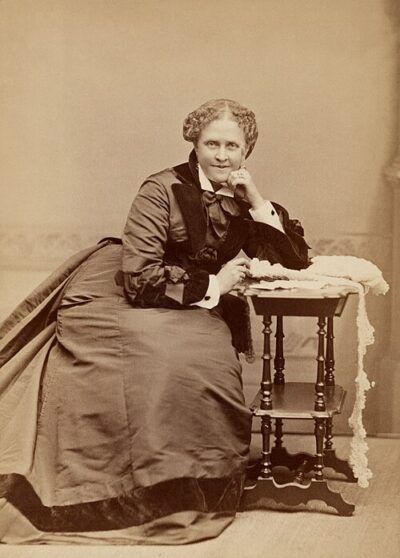
A Century of Dishonor is a non-fiction work by Helen Hunt Jackson.
- Written by
- Helen Hunt Jackson
- Genre
- non-fiction
- Country of origin
- United States
All 5 facts, and where they come from
Facts
5 facts · 0 confirmed by two sources · 0 cited · 5 from one source
Where this comes from
Papalocal keeps its own record. It started from these sources; what each one said is kept here as it was copied, so a change on their side never changes this page by itself. Tap one to read its version.
What Wikidata says · copied November 17, 2026 · revision 2453134672
- Described as
- non-fiction work by Helen Hunt Jackson
- What it is
- written work
- Written by
- Helen Hunt Jackson
- Genre
- non-fiction · 1 reference
- Language
- English
- Country of origin
- United States · 1 reference
- Wikipedias with a page
- 2
Wikidata item Q4655785 (wikidata.org/wiki/Q4655785), public domain (CC0). Copied 2026-11-17.
What Wikipedia says · copied November 17, 2026 · revision 1384240771
A Century of Dishonor: A Sketch of the United States Government's Dealings with Some of the Indian Tribes is a non-fiction book by Helen Hunt Jackson first published in 1881 that chronicled the experiences of Native Americans in the United States, focusing on injustices.
Jackson wrote A Century of Dishonor in an attempt to change government ideas and policy toward Native Americans at a time when the effects of the 1871 Indian Appropriations Act (making the entire Native American population wards of the nation) had begun to draw the attention of the public. Jackson attended a meeting in Boston in 1879 at which Standing Bear, a Ponca, told how the federal government forcibly removed his tribe from their ancestral homeland in the wake of the creation of the Great Sioux Reservation. After meeting Standing Bear, she conducted research at the Astor Library in New York and was shocked by the story of government mistreatment that she found. She wrote in a letter, "I shall be found with 'Indians' engraved on my brain when I am dead.—A fire has been kindled within me which will never go out."
Jackson sent a copy of her book to every member of Congress, at her own expense. She hoped to awaken the conscience of the American people, and their representatives, to the flagrant wrongs that had been done to the American Indians, and persuade them "to redeem the name of the United States from the stain of a century of dishonor".
The book consists primarily of the tribal histories of seven different tribes. Among the incidents it depicts is the eradication of Praying Town Indians in the colonial period, despite their recent conversion to Christianity, because it was assumed that all Indians were the same. Her book brought to light the injustices enacted upon the Native Americans as it chronicled the ruthlessness of white settlers in their greed for land, wealth, and power.
Upon its publication, A Century of Dishonor received some adverse criticism and was dismissed as "sentimental". But it had some effect in shaking the moral senses of America, and in 1881 Congress acted to remedy, in part, the situation of the Ponca people. However, it did not have quite the impact that Jackson wanted, which spurred her to write an emotional appeal to action in Ramona.
Long out of print, A Century of Dishonor was first reprinted in 1964 by Ross & Haines of Minneapolis, Minnesota, via a limited printing of 2,000 copies, and has been reprinted numerous times since then.
From the Wikipedia article “A Century of Dishonor” (en.wikipedia.org/wiki/A_Century_of_Dishonor), by its contributors, under CC BY-SA 4.0 (creativecommons.org/licenses/by-sa/4.0/). Copied 2026-11-17; not changed.
Confirmed Two sources agree. Cited One source, and it names where it got it. One source One source, without a reference of its own. Sources disagree The sources disagree. We show the best-supported value and keep theirs below.