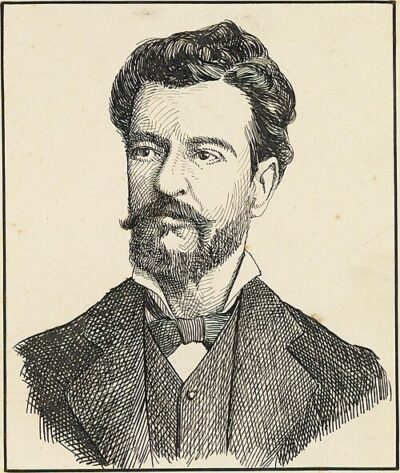
A Escrava Isaura
A Escrava Isaura is a novel by Bernardo Guimarães. It came out in 1875.
- Published
- 1875
- Written by
- Bernardo Guimarães
- Country of origin
- Brazil
All 5 facts, and where they come from
Facts
5 facts · 0 confirmed by two sources · 0 cited · 5 from one source
Where this comes from
Papalocal keeps its own record. It started from these sources; what each one said is kept here as it was copied, so a change on their side never changes this page by itself. Tap one to read its version.
What Wikidata says · copied November 18, 2026 · revision 2555892990
- Described as
- novel by Bernardo Guimarães
- What it is
- literary work
- Written by
- Bernardo Guimarães
- Published
- 1875
- Language
- Portuguese
- Country of origin
- Brazil
- Wikipedias with a page
- 11
Wikidata item Q2662079 (wikidata.org/wiki/Q2662079), public domain (CC0). Copied 2026-11-18.
What Wikipedia says · copied November 18, 2026 · revision 1384282091
A Escrava Isaura (Portuguese pronunciation: [a (i)ʃˈkɾavɐ iˈzawɾɐ], Isaura, The Slave Girl) is a novel written by the Brazilian writer Bernardo Guimarães. It was first published in 1875 by Casa Garnier publishers in Rio de Janeiro. With this novel, Bernardo Guimarães became very famous throughout that country, even said to be admired by Brazil's last Emperor Dom Pedro II.
In 1976, a Brazilian telenovela adaptation produced by Rede Globo was titled Escrava Isaura. It was a worldwide success.
In 2004, a second Brazilian telenovela was produced by TV Record. It was also titled A Escrava Isaura. This adaptation also aired on Telemundo in the United States. This version was dubbed into Spanish and titled La Esclava Isaura.
The title character is so pale-skinned that she is "almost white", making her the Brazilian equivalent of Eliza, from Harriet Beecher Stowe's Uncle Tom's Cabin.
From the Wikipedia article “A Escrava Isaura (novel)” (en.wikipedia.org/wiki/A_Escrava_Isaura_(novel)), by its contributors, under CC BY-SA 4.0 (creativecommons.org/licenses/by-sa/4.0/). Copied 2026-11-18; not changed.
Confirmed Two sources agree. Cited One source, and it names where it got it. One source One source, without a reference of its own. Sources disagree The sources disagree. We show the best-supported value and keep theirs below.