A Journey to the Centre of the Earth
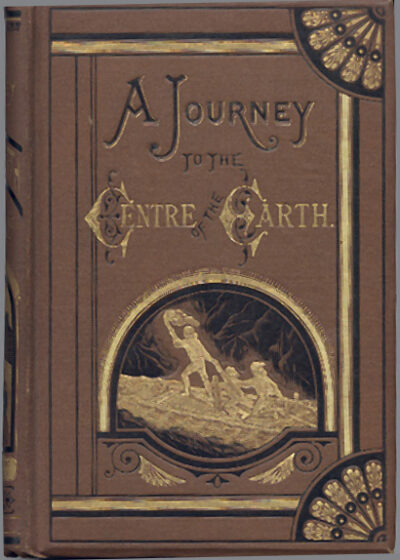
A Journey to the Centre of the Earth is a 1864 science fiction novel by Jules Verne. It is part of Voyages Extraordinaires. It won the NPR Top 100 Science Fiction and Fantasy Books.
- Published
- November 25, 1864
- Written by
- Jules Verne
- Genre
- lost world fiction
- Country of origin
- France
All 15 facts, and where they come from
Facts
15 facts · 0 confirmed by two sources · 2 cited · 13 from one source
Where this comes from
Papalocal keeps its own record. It started from these sources; what each one said is kept here as it was copied, so a change on their side never changes this page by itself. Tap one to read its version.
What Wikidata says · copied November 17, 2026 · revision 2536877060
- Described as
- 1864 science fiction novel by Jules Verne
- Other names
- A Journey to the Interior of the Earth, Journey to the Center of the Earth, Voyage to the Centre of the Earth, A Trip to the Center of the Earth, Journey to the Centre of the Earth, A Journey to the Center of the Earth, A Journey into the Interior of the Earth
- What it is
- literary work
- Written by
- Jules Verne · 2 references
- Publisher
- Hetzel éds · 1 reference
- Genre
- lost world fiction; subterranean fiction; scientific romance; adventure fiction
- Published
- November 25, 1864 · 1 reference
- Language
- French; English
- Country of origin
- France
- Part of the series
- Voyages Extraordinaires
- Comes after
- The Adventures of Captain Hatteras · 1 reference
- Followed by
- From the Earth to the Moon
- Awards
- NPR Top 100 Science Fiction and Fantasy Books
- Wikipedias with a page
- 64
Wikidata item Q219457 (wikidata.org/wiki/Q219457), public domain (CC0). Copied 2026-11-17.
What Wikipedia says · copied November 17, 2026 · revision 1384231618
Journey to the Centre of the Earth (French: Voyage au centre de la Terre), also translated with the variant titles A Journey to the Center of the Earth and A Journey into the Interior of the Earth, is a classic science fiction novel written by French novelist Jules Verne. It was first published in French in 1864, then reissued in 1867 in a revised and expanded edition. Professor Otto Lidenbrock is the tale's central figure, an eccentric German scientist who decodes a message from a 16th century Icelandic alchemist who claims to have reached to the very centre of the earth via volcanic tubes in the crater of the celebrated inactive Icelandic volcano Snæfellsjökull. Lidenbrock, his nephew Axel, and their Icelandic guide Hans rappel into the volcano, then contend with many dangers, including cave-ins, subpolar tornadoes, an underground ocean, and a variety of prehistoric life (the 1867 edition inserted additional prehistoric material). Eventually the three explorers are spewed back to the surface by the eruption of an active volcano, Stromboli, located in southern Italy.
The category of subterranean fiction existed well before Verne. However, his novel's distinction lay in its well-researched Victorian science and its inventive contribution to the science-fiction subgenre of time travel—Verne's innovation was the concept of a prehistoric realm still existing in the present-day world. Journey inspired many later authors, including Sir Arthur Conan Doyle in his novel The Lost World, Edgar Rice Burroughs in his Pellucidar series, and J. R. R. Tolkien in The Hobbit.
From the Wikipedia article “Journey to the Centre of the Earth” (en.wikipedia.org/wiki/Journey_to_the_Centre_of_the_Earth), by its contributors, under CC BY-SA 4.0 (creativecommons.org/licenses/by-sa/4.0/). Copied 2026-11-17; not changed.
Confirmed Two sources agree. Cited One source, and it names where it got it. One source One source, without a reference of its own. Sources disagree The sources disagree. We show the best-supported value and keep theirs below.
Picture: The original uploader was Sherurcij at English Wikisource., via Wikimedia Commons · Public domain