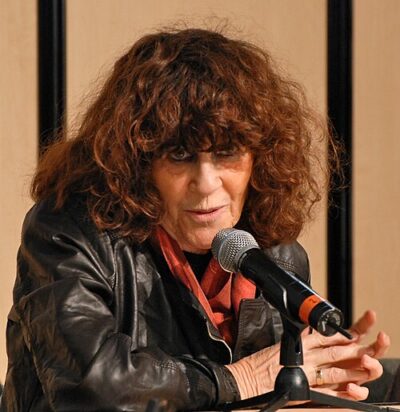
A Season in the Life of Emmanuel
A Season in the Life of Emmanuel is a 1965 novel. It was written by Marie-Claire Blais.
- Published
- 1965
- Written by
- Marie-Claire Blais
- Genre
- LGBT-related literature
- Country of origin
- Canada
All 6 facts, and where they come from
Facts
6 facts · 0 confirmed by two sources · 0 cited · 6 from one source
Where this comes from
Papalocal keeps its own record. It started from these sources; what each one said is kept here as it was copied, so a change on their side never changes this page by itself. Tap one to read its version.
What Wikidata says · copied November 17, 2026 · revision 2400049602
- Described as
- 1965 novel
- What it is
- written work
- Written by
- Marie-Claire Blais
- Genre
- LGBT-related literature
- Published
- 1965
- Language
- French
- Country of origin
- Canada
- Wikipedias with a page
- 3
Wikidata item Q3549746 (wikidata.org/wiki/Q3549746), public domain (CC0). Copied 2026-11-17.
What Wikipedia says · copied November 17, 2026 · revision 1384409145
A Season in the Life of Emmanuel (French: Une saison dans la vie d'Emmanuel) is a French Canadian novel by Marie-Claire Blais, published in 1965.
The novel centres on a large rural farm family in Quebec headed by domineering matriarch Antoinette, and depicts their lives around the time of the birth of Emmanuel, the family's sixteenth child. The novel focuses primarily on Emmanuel's teenage siblings Pomme, Héloïse, "Septième" (Fortuné-Mathias) and Jean-Le Maigre, who are all in some state of rebellion against the family order; in its themes of moral and sexual transgression, the novel is part of the anti-terroir tradition in Quebec literature.
The novel was adapted for film by director Claude Weisz in 1972.
From the Wikipedia article “A Season in the Life of Emmanuel” (en.wikipedia.org/wiki/A_Season_in_the_Life_of_Emmanuel), by its contributors, under CC BY-SA 4.0 (creativecommons.org/licenses/by-sa/4.0/). Copied 2026-11-17; not changed.
Confirmed Two sources agree. Cited One source, and it names where it got it. One source One source, without a reference of its own. Sources disagree The sources disagree. We show the best-supported value and keep theirs below.