A Series of Unfortunate Events
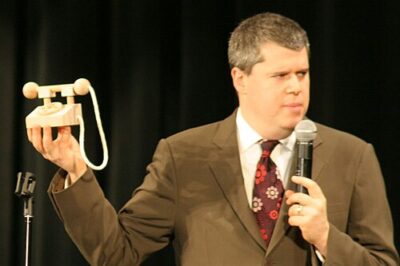
A Series of Unfortunate Events is a novel series by Lemony Snicket. It came out in 1998. It was written by Daniel Handler.
- Released
- 1998
- Written by
- Daniel Handler
- Genre
- young adult fiction
- Country of origin
- United States
All 12 facts, and where they come from
Facts
12 facts · 0 confirmed by two sources · 0 cited · 12 from one source
Where this comes from
Papalocal keeps its own record. It started from these sources; what each one said is kept here as it was copied, so a change on their side never changes this page by itself. Tap one to read its version.
What Wikidata says · copied November 17, 2026 · revision 2559982172
- Described as
- novel series by Lemony Snicket
- What it is
- novel series; children's book series
- Written by
- Daniel Handler
- Publisher
- HarperCollins
- Genre
- young adult fiction; Gothic fiction; absurdist fiction; mystery fiction
- Released
- 1998
- Language
- English
- Country of origin
- United States
- Official website
- https://www.lemonysnicket.com/
- Wikipedias with a page
- 46
Wikidata item Q213841 (wikidata.org/wiki/Q213841), public domain (CC0). Copied 2026-11-17.
What Wikipedia says · copied November 17, 2026 · revision 1385853029
A Series of Unfortunate Events is a series of thirteen children's novels written by American author Daniel Handler under the pen name Lemony Snicket. The books follow the turbulent lives of orphaned siblings Violet, Klaus, and Sunny Baudelaire. After their parents' death in a fire, the children are placed under the care of a murderous villain, Count Olaf, who attempts to steal their inheritance and causes numerous disasters with the help of his accomplices as the children attempt to flee. Count Olaf pursues the children and their money throughout the books, wearing a different disguise each time. As the plot progresses, the Baudelaires gradually confront further mysteries surrounding their family and deep conspiracies involving a secret society, which also involves Olaf and Lemony Snicket, the author's own fictional self-insert.
Characterized by Victorian Gothic tones and absurdist textuality, the books are noted for their dark humor, sarcastic storytelling, and anachronistic elements, as well as frequent cultural and literary allusions. They have been classified as postmodern and metafictional writing, with the plot evolution throughout the later novels being cited as an exploration of the psychological process of the transition from the innocence of childhood to the moral complexity of maturity. As the series progresses, the Baudelaires must face the reality that their actions have become morally ambiguous, blurring the lines between which characters should be read as "good" or "evil".
Since the release of the first novel, The Bad Beginning, in September 1999, the books have gained significant popularity, critical acclaim, and commercial success worldwide, spawning a film, a video game, assorted merchandise, and a television series. The main thirteen books in the series have collectively sold more than 60 million copies and have been translated into 41 languages. Several companion books set in the same universe of the series have also been released, including Lemony Snicket: The Unauthorized Autobiography, The Beatrice Letters, and the noir prequel tetralogy All the Wrong Questions, which chronicles Snicket's childhood.
From the Wikipedia article “A Series of Unfortunate Events” (en.wikipedia.org/wiki/A_Series_of_Unfortunate_Events), by its contributors, under CC BY-SA 4.0 (creativecommons.org/licenses/by-sa/4.0/). Copied 2026-11-17; not changed.
Confirmed Two sources agree. Cited One source, and it names where it got it. One source One source, without a reference of its own. Sources disagree The sources disagree. We show the best-supported value and keep theirs below.