A Universe from Nothing
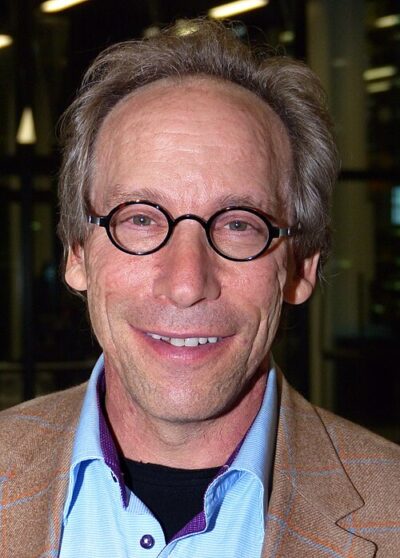
A Universe from Nothing is a book by Lawrence Krauss. It came out in 2012. It was written by Lawrence M. Krauss.
- Published
- January 10, 2012
- Written by
- Lawrence M. Krauss
- Genre
- popularisation of science
- Country of origin
- United States
All 10 facts, and where they come from
Facts
10 facts · 0 confirmed by two sources · 0 cited · 10 from one source
Where this comes from
Papalocal keeps its own record. It started from these sources; what each one said is kept here as it was copied, so a change on their side never changes this page by itself. Tap one to read its version.
What Wikidata says · copied November 17, 2026 · revision 2513250261
- Described as
- book by Lawrence Krauss
- What it is
- written work
- Written by
- Lawrence M. Krauss
- Publisher
- Free Press
- Genre
- popularisation of science
- Published
- January 10, 2012
- Language
- English
- Country of origin
- United States · 1 reference
- Comes after
- Quantum Man: Richard Feynman's Life in Science
- Followed by
- The Greatest Story Ever Told—So Far · 1 reference
- Official website
- http://krauss.faculty.asu.edu/books/a-universe-from-nothing/
- Wikipedias with a page
- 17
Wikidata item Q2925710 (wikidata.org/wiki/Q2925710), public domain (CC0). Copied 2026-11-17.
What Wikipedia says · copied November 17, 2026 · revision 1384374693
A Universe from Nothing: Why There Is Something Rather than Nothing is a popular science book by physicist Lawrence M. Krauss. Published by Free Press in January 2012, the book discusses modern cosmogony and its implications for the debate about the existence of God. Krauss describes recent advances in the understanding of quantum gravity and quantum fluctuations, and how they make it possible for universes to "spontaneously appear from nothing". In the Epilogue, he summarizes his main assertion: "[W]e have discovered that all signs suggest a universe that could and plausibly did arise from a deeper nothing—involving the absence of space itself and—which may one day return to nothing via processes that may not only be comprehensible but also processes that do not require any external control or direction." Critics of the book faulted Krauss for using the term "nothing" in a misleading way that does not answer key questions.
From the Wikipedia article “A Universe from Nothing” (en.wikipedia.org/wiki/A_Universe_from_Nothing), by its contributors, under CC BY-SA 4.0 (creativecommons.org/licenses/by-sa/4.0/). Copied 2026-11-17; not changed.
Confirmed Two sources agree. Cited One source, and it names where it got it. One source One source, without a reference of its own. Sources disagree The sources disagree. We show the best-supported value and keep theirs below.