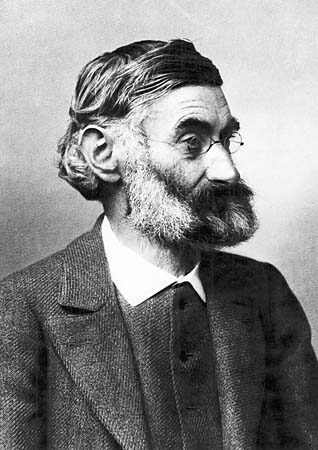
Abbe number
Abbe number is a material dispersion property.
All 3 facts, and where they come from
Facts
3 facts · 0 confirmed by two sources · 0 cited · 3 from one source
Where this comes from
Papalocal keeps its own record. It started from these sources; what each one said is kept here as it was copied, so a change on their side never changes this page by itself. Tap one to read its version.
What Wikidata says · copied November 17, 2026 · revision 2457697656
- Described as
- material dispersion property
- Other names
- Abbe diagram, V-number, Constringence, Abbe value
- What it is
- thermodynamic material property; physical theory
- Named after
- Ernst Abbe
- Wikipedias with a page
- 35
Wikidata item Q306259 (wikidata.org/wiki/Q306259), public domain (CC0). Copied 2026-11-17.
What Wikipedia says · copied November 17, 2026 · revision 1303959530
In optics and lens design, the Abbe number, also known as the Vd-number or constringence of a transparent material, is an approximate measure of a material's dispersion (change in refractive index as a function of wavelength), with high Vd values indicating low dispersion. It is named after Ernst Abbe (1840–1905), the German physicist who defined it. The term Vd-number should not be confused with the normalized frequency in fibers.
The Abbe number Vd of a material is defined as:
Vd≡nd−1nF−nC,
where nC, nd, and nF are the refractive indices of the material at the wavelengths of the Fraunhofer's C, d, and F spectral lines (656.3 nm, 587.56 nm, and 486.1 nm, respectively). This formulation only applies to human vision; outside this range, alternative spectral lines are required. For non-visible spectral lines, the term "V-number" is more commonly used. The more general formulation is
V≡ncenter−1nshort−nlong,
where nshort, ncenter, and nlong are the refractive indices of the material at three different wavelengths.
Abbe numbers are used to classify glass and other optical materials in terms of their chromaticity. For example, the higher dispersion flint glasses have relatively small Abbe numbers V less than 55, whereas the lower dispersion crown glasses have larger Abbe numbers. Values of Vd range from below 25 for very dense flint glasses, around 34 for polycarbonate plastics, up to 65 for common crown glasses, and 75 to 85 for some fluorite and phosphate crown glasses.Abbe numbers are useful in the design of achromatic lenses, as their reciprocal is proportional to dispersion (slope of refractive index versus wavelength) in the domain where the human eye is most sensitive (see above figure). For other wavelength regions, or for higher precision in characterizing a system's chromaticity (such as in the design of apochromats), the full dispersion relation is used (i.e., refractive index as a function of wavelength).
From the Wikipedia article “Abbe number” (en.wikipedia.org/wiki/Abbe_number), by its contributors, under CC BY-SA 4.0 (creativecommons.org/licenses/by-sa/4.0/). Copied 2026-11-17; not changed.
Confirmed Two sources agree. Cited One source, and it names where it got it. One source One source, without a reference of its own. Sources disagree The sources disagree. We show the best-supported value and keep theirs below.