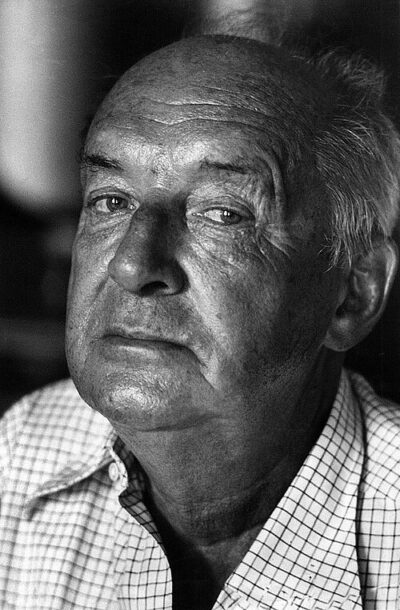
Ada or Ardor: A Family Chronicle
Ada or Ardor: A Family Chronicle is a 1969 novel by Vladimir Nabokov.
- Published
- 1969
- Came out
- 1959
- Written by
- Vladimir Nabokov
- Genre
- alternate history
- Country of origin
- United States
All 9 facts, and where they come from
Facts
9 facts · 0 confirmed by two sources · 0 cited · 9 from one source
Where this comes from
Papalocal keeps its own record. It started from these sources; what each one said is kept here as it was copied, so a change on their side never changes this page by itself. Tap one to read its version.
What Wikidata says · copied November 16, 2026 · revision 2568619392
- Described as
- 1969 novel by Vladimir Nabokov
- Other names
- Ada
- What it is
- literary work
- Written by
- Vladimir Nabokov
- Publisher
- McGraw Hill Book Company
- Genre
- alternate history; science fiction
- Published
- 1969
- Language
- English
- Country of origin
- United States
- Came out
- 1959
- Wikipedias with a page
- 18
Wikidata item Q117431 (wikidata.org/wiki/Q117431), public domain (CC0). Copied 2026-11-16.
What Wikipedia says · copied November 16, 2026 · revision 1384237425
Ada, or Ardor: A Family Chronicle is a novel by Vladimir Nabokov. It was originally published in 1969 by McGraw Hill Book Company and is currently published by Penguin Random House.
Ada, or Ardor began to materialize in 1959, when Nabokov was flirting with two projects, "The Texture of Time" and "Letters from Terra." In 1965, he began to see a link between the two ideas, finally composing a unified novel from February 1966 to October 1968. The published cumulation would become his longest work. Ada was initially given a mixed reception. However, writing in The New York Times Book Review, noted scholar Alfred Appel called it "a great work of art, a necessary book, radiant and rapturous," and said that it "provides further evidence that he is a peer of Kafka, Proust and Joyce."
From the Wikipedia article “Ada, or Ardor: A Family Chronicle” (en.wikipedia.org/wiki/Ada,_or_Ardor:_A_Family_Chronicle), by its contributors, under CC BY-SA 4.0 (creativecommons.org/licenses/by-sa/4.0/). Copied 2026-11-16; not changed.
Confirmed Two sources agree. Cited One source, and it names where it got it. One source One source, without a reference of its own. Sources disagree The sources disagree. We show the best-supported value and keep theirs below.