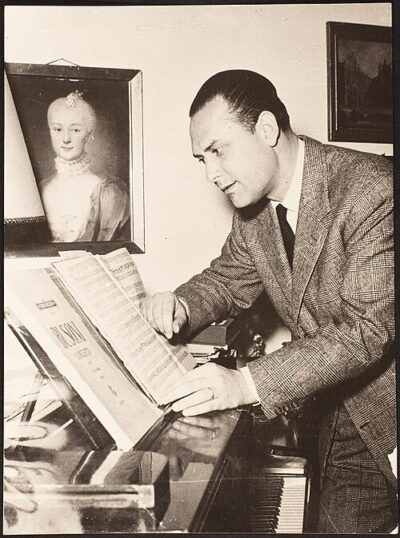
Adagio in G minor
Adagio in G minor is a musical work by Remo Giazotto. It came out in 1958.
- Released
- 1958
All 5 facts, and where they come from
Facts
5 facts · 0 confirmed by two sources · 0 cited · 5 from one source
Where this comes from
Papalocal keeps its own record. It started from these sources; what each one said is kept here as it was copied, so a change on their side never changes this page by itself. Tap one to read its version.
What Wikidata says · copied November 18, 2026 · revision 2568955399
- Described as
- musical work by Remo Giazotto
- Other names
- Sometimes attributed to Albinoni
- What it is
- musical hoax; musical work/composition
- Music by
- Remo Giazotto
- Released
- 1958
- Named after
- Tomaso Albinoni
- Wikipedias with a page
- 22
Wikidata item Q346741 (wikidata.org/wiki/Q346741), public domain (CC0). Copied 2026-11-18.
What Wikipedia says · copied November 18, 2026 · revision 1375241214
Adagio in Sol minore per archi e organo su due spunti tematici e su un basso numerato di Tomaso Albinoni (Mi 26) (Adagio in G minor for strings and organ, on two thematic ideas and a figured bass by Tomaso Albinoni), also known as "Albinoni's Adagio", is a 1958 neo-Baroque composition often misattributed to the 18th-century Venetian composer Tomaso Albinoni. In fact, the work was composed by a 20th-century musicologist and Albinoni biographer named Remo Giazotto. The piece was purportedly based on the discovery of a bass line by Albinoni in a manuscript fragment.
Scholarly debate over the existence of the fragment persists, with some seeing the affair as a musical hoax perpetrated by Giazotto. There is no room for doubt when it comes to the source of everything in the Adagio other than the bassline, and Giazotto's authorship of these parts is not disputed.
From the Wikipedia article “Adagio in G minor” (en.wikipedia.org/wiki/Adagio_in_G_minor), by its contributors, under CC BY-SA 4.0 (creativecommons.org/licenses/by-sa/4.0/). Copied 2026-11-18; not changed.
Confirmed Two sources agree. Cited One source, and it names where it got it. One source One source, without a reference of its own. Sources disagree The sources disagree. We show the best-supported value and keep theirs below.