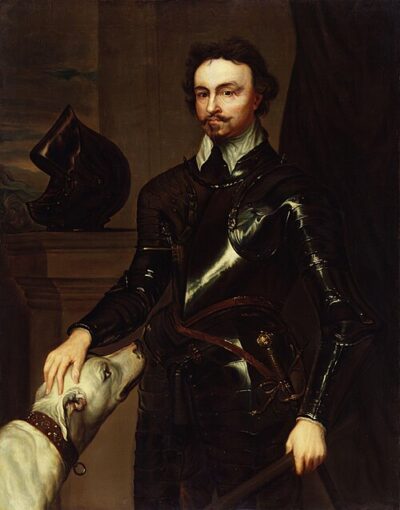
Addled Parliament
The Addled Parliament is the second Parliament of England of the reign of James I of England, which sat between 5 April and 7 June 1614.
All 1 facts, and where they come from
Facts
1 facts · 0 confirmed by two sources · 0 cited · 1 from one source
Where this comes from
Papalocal keeps its own record. It started from these sources; what each one said is kept here as it was copied, so a change on their side never changes this page by itself. Tap one to read its version.
What Wikidata says · copied November 18, 2026 · revision 2345524885
- Described as
- the second Parliament of England of the reign of James I of England, which sat between 5 April and 7 June 1614
- What it is
- legislative term
- Wikipedias with a page
- 6
Wikidata item Q1412093 (wikidata.org/wiki/Q1412093), public domain (CC0). Copied 2026-11-18.
What Wikipedia says · copied November 18, 2026 · revision 1369111378
The Parliament of 1614 was the second Parliament of England of the reign of James VI and I and sat between 5 April and 7 June 1614. Lasting only two months and two days, it saw no bills pass and was not even regarded as a parliament by contemporaries. However, for its failure it has been known to posterity as the Addled Parliament.
James had struggled with debt ever since he came to the English throne. The failure of the Blessed Parliament of 1604–1611 to, in its seven-year sitting, either rescue James from his mounting debt or allow the king to unite his two kingdoms had left him bitter with the body. The four-year hiatus between parliaments saw the royal debt and deficit grow further, in spite of the best efforts of Treasurer Lord Salisbury. The failure of the last and most lucrative financial expedient of the period, a foreign dowry from the marriage of his heir-apparent, finally convinced James to recall Parliament in early 1614.
The parliament got off to a bad start, with poor choices made for the king's representatives in Parliament. Rumours of conspiracies to manage Parliament (the "undertaking") or to pack it with easily controlled members, though not based in fact, spread quickly. The spreading of that rumour and the ultimate failure of Parliament have been generally attributed to the scheming of the crypto-Catholic Earl of Northampton, but that allegation has met with some recent skepticism. Parliament opened on 5 April and, despite the king's wishes it would be a "Parliament of Love", flung itself immediately into the controversy over the conspiracies, which split Parliament and led to the exclusion of one alleged packer. However, by late April, Parliament had moved on to a familiar controversy, that of impositions. The House of Commons were pitted against the House of Lords, culminating in a controversy over an unrestrained speech by one prelate.
James grew impatient with the parliamentary proceedings. He issued an ultimatum to Parliament, which treated it irreverently. Insult was added to injury by belligerent and supposedly-threatening attacks on him from the Commons. On the advice of Northampton, James dissolved Parliament on 7 June and had four Members of Parliament (MPs) sent to the Tower of London. James devised new financial expedients to settle his still-growing debt, with little success. Historiographically, historians are divided between the Whiggish view of the parliament as anticipating the constitutional disputes of future parliaments and the revisionist view of it as a conflict primarily concerned with James's finances.
From the Wikipedia article “Addled Parliament” (en.wikipedia.org/wiki/Addled_Parliament), by its contributors, under CC BY-SA 4.0 (creativecommons.org/licenses/by-sa/4.0/). Copied 2026-11-18; not changed.
Confirmed Two sources agree. Cited One source, and it names where it got it. One source One source, without a reference of its own. Sources disagree The sources disagree. We show the best-supported value and keep theirs below.