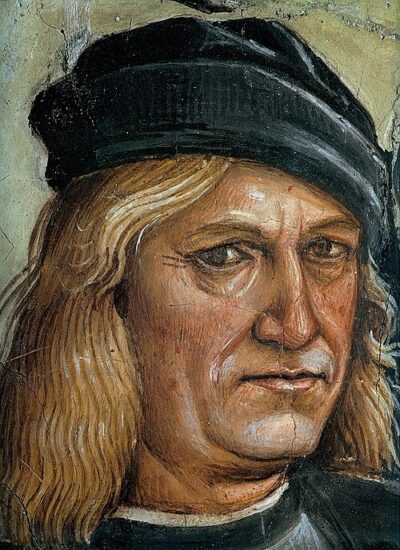
Adoration of the Magi
Adoration of the Magi is a painting by Luca Signorelli in the Louvre. It came out in 1475.
- Came out
- 15th century (1475–1500)
- Created by
- Luca Signorelli
- Genre
- religious art
- Country of origin
- Italy
All 7 facts, and where they come from
Facts
7 facts · 0 confirmed by two sources · 0 cited · 7 from one source
Where this comes from
Papalocal keeps its own record. It started from these sources; what each one said is kept here as it was copied, so a change on their side never changes this page by itself. Tap one to read its version.
What Wikidata says · copied November 17, 2026 · revision 2503385506
- Described as
- painting by Luca Signorelli in the Louvre
- What it is
- painting · 1 reference
- Created by
- Luca Signorelli · 1 reference
- Genre
- religious art
- Country of origin
- Italy
- Came out
- 15th century (1475–1500) · 1 reference
- Owned by
- Giampietro Campana (–1861); Pius VI (1789–)
- Wikipedias with a page
- 4
Wikidata item Q3605540 (wikidata.org/wiki/Q3605540), public domain (CC0). Copied 2026-11-17.
What Wikipedia says · copied November 17, 2026 · revision 1374139788
Adoration of the Magi is a painting in tempera on wood panel by Luca Signorelli (1450–1523) and his assistants, executed c. 1493–1494, and now in the Louvre in Paris. It was probably the first painting he produced in Città di Castello, and originally hung over the main altar of the monastery church of Sant'Agostino. The surface displayed within the frame is 331 cm by 245.5 cm. In late 2022 it was not on display.
It was the main element in an altarpiece that is now dispersed. Four small predella panels now in other collections have been connected by art historians with the piece. These are now in a private collection in Scotland, the Virginia Museum of Fine Arts in Richmond, the National Gallery of Art in Washington, and the John G. Johnson Collection in the Philadelphia Museum of Art.
Signorelli was born in the town of Cortona in Tuscany, about 20 kilometres from Città di Castello in Umbria. In his early 40s he had returned to live in Cortona, after working in Florence, Siena and Rome (1478–1484, painting a now lost section of the Sistine Chapel). With an established reputation, he remained based in Cortona for the rest of his life, but often travelled to the cities of the region to fulfill commissions. This altarpiece comes a few years before the large set of frescos in Orvieto Cathedral which have always been regarded as his masterpiece. Probably trained by Piero della Francesca in Florence, as his cousin Giorgio Vasari wrote, his Quattrocento style was about to become rather out of date over the following years. The earliest documented painting by the young Raphael was the Baronci Altarpiece (1500–1501) for the same church for which this altarpiece was painted; this was badly damaged in an earthquake in 1789, and only fragments survive.
From the Wikipedia article “Adoration of the Magi (Signorelli)” (en.wikipedia.org/wiki/Adoration_of_the_Magi_(Signorelli)), by its contributors, under CC BY-SA 4.0 (creativecommons.org/licenses/by-sa/4.0/). Copied 2026-11-17; not changed.
Confirmed Two sources agree. Cited One source, and it names where it got it. One source One source, without a reference of its own. Sources disagree The sources disagree. We show the best-supported value and keep theirs below.
Picture: Wikimedia Commons: L’Adoration des Mages par Luca Signorelli.jpg · See Commons file page