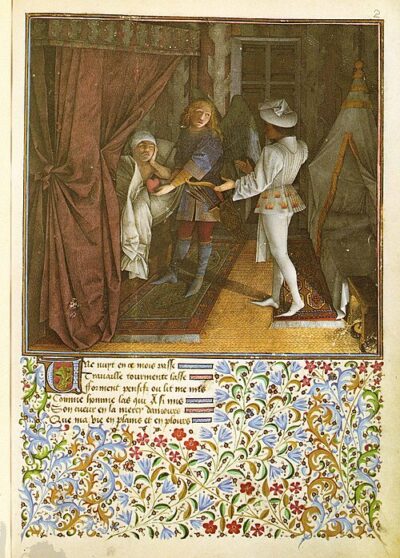
Aix Annunciation
Aix Annunciation is a painting originally placed in the church of Saint-Sauveur, Aix-en-Provence, southern France. It was created by Barthélemy d'Eyck.
- Came out
- 1440s
- Created by
- Barthélemy d'Eyck
- Genre
- religious art
All 5 facts, and where they come from
Facts
5 facts · 0 confirmed by two sources · 3 cited · 2 from one source
Where this comes from
Papalocal keeps its own record. It started from these sources; what each one said is kept here as it was copied, so a change on their side never changes this page by itself. Tap one to read its version.
What Wikidata says · copied November 19, 2026 · revision 2381052362
- Described as
- painting originally placed in the church of Saint-Sauveur, Aix-en-Provence, southern France
- Other names
- Annunciation altarpiece with Isaiah and Jeremiah, The prophet Isajah (left), the annunciation (centre), the prophet Jeremiah (right)
- What it is
- triptych · 1 reference
- Created by
- Barthélemy d'Eyck
- Genre
- religious art · 1 reference
- Came out
- 1440s · 1 reference
- Country
- France · 1 reference
- Wikipedias with a page
- 12
Wikidata item Q1535573 (wikidata.org/wiki/Q1535573), public domain (CC0). Copied 2026-11-19.
What Wikipedia says · copied November 19, 2026 · revision 1361241958
The Aix Annunciation is a c. 1445 painting attributed to Barthélemy d'Eyck or the so-called Master of the Annunciation of Aix-en-Provence. It was commissioned for the Cathédrale Saint-Sauveur, Aix-en-Provence, southern France.
Now it is divided between the Église de la Madeleine in the same city (central panel with the Annunciation), the Museum Boijmans Van Beuningen (part of the left panel with the prophet Isaiah) at Rotterdam, the Rijksmuseum of Amsterdam (upper part of the left panel), while the right panel is in the Royal Museum of Fine Arts of Belgium in Brussels.
The side panels are painted on both sides and show Christ on the right and Mary Magdalene on the left (the upper part, on reverse of the Amsterdam panel, does not survive); together they used to form a Noli me tangere scene when the triptych was folded shut.
From the Wikipedia article “Aix Annunciation” (en.wikipedia.org/wiki/Aix_Annunciation), by its contributors, under CC BY-SA 4.0 (creativecommons.org/licenses/by-sa/4.0/). Copied 2026-11-19; not changed.
Confirmed Two sources agree. Cited One source, and it names where it got it. One source One source, without a reference of its own. Sources disagree The sources disagree. We show the best-supported value and keep theirs below.
Picture: Wikimedia Commons: Barthélemy d'Eyck - Aix Verkündigung, ca. 1443–45.jpg · See Commons file page