All Japan Pro Wrestling
All Japan Pro Wrestling is a Japanese professional wrestling promotion established in 1972. It was founded by Giant Baba. Its headquarters are in Yushima.
- Founded
- October 21, 1972
- Founded by
- Giant Baba
- Headquarters
- Yushima
- Country
- Japan
All 9 facts, and where they come from
Facts
9 facts · 0 confirmed by two sources · 0 cited · 9 from one source
Where this comes from
Papalocal keeps its own record. It started from these sources; what each one said is kept here as it was copied, so a change on their side never changes this page by itself. Tap one to read its version.
What Wikidata says · copied November 17, 2026 · revision 2569594316
- Described as
- Japanese professional wrestling promotion established in 1972
- Other names
- All Japan, AJPW
- What it is
- business; sports organization; professional wrestling promotion
- Founded
- October 21, 1972
- Founded by
- Giant Baba
- Headquarters
- Yushima
- Country
- Japan
- Sport
- professional wrestling
- Official website
- http://www.all-japan.co.jp/
- Wikipedias with a page
- 15
Wikidata item Q1359107 (wikidata.org/wiki/Q1359107), public domain (CC0). Copied 2026-11-17.
What Wikipedia says · copied November 17, 2026 · revision 1383741841
All Japan Pro-Wrestling (全日本プロレス, Zen Nihon Puroresu; operating as All Japan Pro-Wrestling Co., Ltd. (オールジャパン・プロレスリング株式会社, Ōru Japan puroresuringu Kabushiki-gaisha) and usually abbreviated as AJPW or All Japan) is a Japanese professional wrestling promotion.
A promotion bult on the Ōdō (王道; "King's Road" or "Royal Road") style of wrestling, All Japan was founded on October 21, 1972 by Shohei "Giant" Baba after he and Antonio Inoki left the Japanese Wrestling Association to establish new promotions. Many wrestlers had left with Baba, with many more joining the following year when the JWA folded. From the mid-1970s, All Japan was firmly established as a contender for the largest wrestling promotion in Japan along with its rival New Japan Pro-Wrestling (founded by Inoki). Their roster had increased to include several wrestlers associated with the National Wrestling Alliance, such as Stan Hansen, Ric Flair, Terry Funk and Dory Funk Jr., and Harley Race among others. Their native talent consisted of Baba, as well as the Baba-heralded ace Jumbo Tsuruta, Genichiro Tenryu, junior wrestler Masanobu Fuchi and the defected NJPW wrestler Riki Choshu.
As the 1990s began and Tenryu had split from All Japan to form the Super World of Sports (SWS) promotion, stars like Tsuruta and Fuchi gave way to a younger generation; including the Four Heavenly Kings (プロレスの四天王, Puroresu no shiten'nō; also called the Four Pillars of Heaven): Mitsuharu Misawa, Kenta Kobashi, Toshiaki Kawada and Akira Taue as well as Jun Akiyama, Tsuyoshi Kikuchi, and gaijin wrestler Steve Williams. These wrestlers, led to perhaps All Japan's most profitable period in the 1990s. Western journalists such as Dave Meltzer delivered high praise of All Japan and its wrestlers, including Misawa, Kobashi and Kawada. Several matches that include the Kings and others within All Japan in the 1990s were given five-stars or more by Meltzer, and some are even purported to be some of the greatest matches in wrestling history.
In 1999, Giant Baba died and the promotion was run by his widow, Motoko. Misawa was named president but left in 2000 after disagreements with Motoko. Misawa created Pro Wrestling Noah and every single native wrestler besides Masanobu Fuchi and Toshiaki Kawada left All Japan. This led to a loss of All Japan's TV deal and a period of hardship for the company. In 2001, they entered a cross-promotion agreement with New Japan Pro-Wrestling which proved very successful, allowing All Japan to remain one of the larger promotions in the country, although now firmly behind NJPW. In January 2002, Keiji Muto defected to All Japan, and was officially appointed as its new president that September. He would then acquire the rights to the company and Baba family stock by early 2003. By mid-2005, All Japan's attendance had dropped and the promotion seemed to be in trouble again; but by 2007, All Japan had new sponsors and seemed to have recovered.
With established wrestlers such as Muto and 2000s ace Suwama, as well as Satoshi Kojima, Masakatsu Funaki and Minoru Suzuki providing experience and drawing power, younger wrestlers were given opportunities to develop. By 2010, those younger wrestlers were increasingly positioned to take on larger roles within the promotion. Although the promotion continued to operate without a major television deal, All Japan had maintained a continuous presence since its founding in 1972, making it one of Japan's longest-running wrestling promotions. Today, wrestlers such as Reiwa era ace Kento Miyahara, Yuma Aoyagi, Yuma Anzai and the Saito Brothers continue to represent All Japan nationally. All Japan is a member of the United Japan Pro-Wrestling association, with president Tsuyoki Fukuda being a director for the association; as such in UJPW, they have frequently collaborated with other wrestling promotions and freelance talents to boost their strengths.
From the Wikipedia article “All Japan Pro Wrestling” (en.wikipedia.org/wiki/All_Japan_Pro_Wrestling), by its contributors, under CC BY-SA 4.0 (creativecommons.org/licenses/by-sa/4.0/). Copied 2026-11-17; not changed.
Confirmed Two sources agree. Cited One source, and it names where it got it. One source One source, without a reference of its own. Sources disagree The sources disagree. We show the best-supported value and keep theirs below.
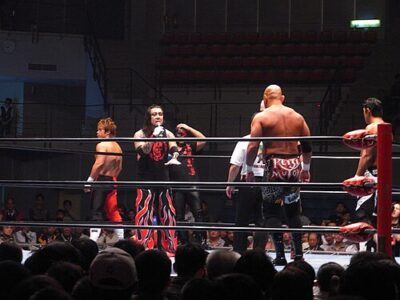
Picture: Harry Li, via Wikimedia Commons · CC BY 2.0