All-Russian Scientific Research Institute of Experimental Physics
The All-Russian Scientific Research Institute of Experimental Physics is a research institute based in Sarov, Russia. It was founded in 1947. It won the Order 'For Valiant Labor'.
- Founded
- 1947
- Country
- Russia (1991–)
All 7 facts, and where they come from
Facts
7 facts · 0 confirmed by two sources · 0 cited · 7 from one source
Where this comes from
Papalocal keeps its own record. It started from these sources; what each one said is kept here as it was copied, so a change on their side never changes this page by itself. Tap one to read its version.
What Wikidata says · copied November 17, 2026 · revision 2569871964
- Described as
- research institute based in Sarov, Russia
- Other names
- VNIIEF, NPO VNIIEF, KB-11
- What it is
- Federal Nuclear Center; organization
- Founded
- 1947 · 1 reference
- Country
- Russia (1991–)
- Chair
- Pavel Zernov (1946–1951) · 1 reference
- Awards
- Order 'For Valiant Labor' · 1 reference
- Official website
- http://www.vniief.ru/
- Wikipedias with a page
- 14
Wikidata item Q3152467 (wikidata.org/wiki/Q3152467), public domain (CC0). Copied 2026-11-17.
What Wikipedia says · copied November 17, 2026 · revision 1365582227
The All-Russian Scientific Research Institute of Experimental Physics (VNIIEF; Russian: Всероссийский научно-исследовательский институт экспериментальной физики) is a research institute based in Sarov (formerly Arzamas-16), Russia and established in 1947. During the Soviet era, it was known as KB-11 and All-Soviet (All-Union) Scientific Research Institute of Experimental Physics (also abbreviated VNIIEF) (Russian: Всесоюзный научно-исследовательский институт экспериментальной физики, ВНИИЭФ). It is currently part of the Rosatom group.
The All-Russian Scientific Research Institute of Experimental Physics is the former Soviet Union's premier research and development center for nuclear weapons. The first Soviet atomic bomb was developed here in the late 1940s, after which the center continued as a center for nuclear weapons research.
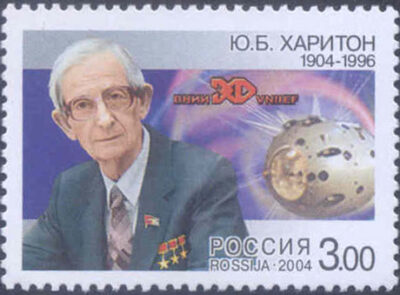
Many of the Soviet Union's best physicists were associated with Arzamas-16: Academician Andrey D. Sakharov worked here for nearly 20 years, and Academician Yuliy B. Khariton still served as the Center's scientific head in the 1990s.
Before being given its current name, the facility was successively known as the Volga Office, KB-11, Object No. 550 (Site 550), "Kremlev" (Kremlyev), "Center 300, Moscow", Arzamas-75 and Arzamas-16. Other initial provisional names included Base 112 and Yasnogorsk. The researchers working there have sometimes referred to the place as "Los Arzamas" (after the American nuclear research facility Los Alamos).
As of August 2019, the Research Institute of Experimental Physics was a very large research complex with these institutes: Theoretical and mathematical physics (Russian: теоретической и математической физики), Gas dynamics and explosion physics (Russian: Газодинамики и физики взрыва), Nuclear and radiation physics (Russian: Ядерной и радиационной физики), Laser physical research (Russian: Лазерно-физических исследований), and the Scientific and Technical Complex (Russian: Научно-технический комплекс) also known as the KB (Russian: КБ), which consists of KB-1 (nuclear charges) (Russian: КБ-1 (ядерные заряды)), KB-2 (nuclear munitions) (Russian: КБ-2 (ядерные боеприпасы)), KB-3 (special security) (Russian: КБ-3 (специальная безопасность)), and KB-12 (special topics) (Russian: КБ-12 (специальная тематика)).
From the Wikipedia article “All-Russian Scientific Research Institute of Experimental Physics” (en.wikipedia.org/wiki/All-Russian_Scientific_Research_Institute_of_Experimental_Physics), by its contributors, under CC BY-SA 4.0 (creativecommons.org/licenses/by-sa/4.0/). Copied 2026-11-17; not changed.
Confirmed Two sources agree. Cited One source, and it names where it got it. One source One source, without a reference of its own. Sources disagree The sources disagree. We show the best-supported value and keep theirs below.
Picture: Wikimedia Commons: Tsar Bomba Revised.jpg · See Commons file page