American Colonization Society
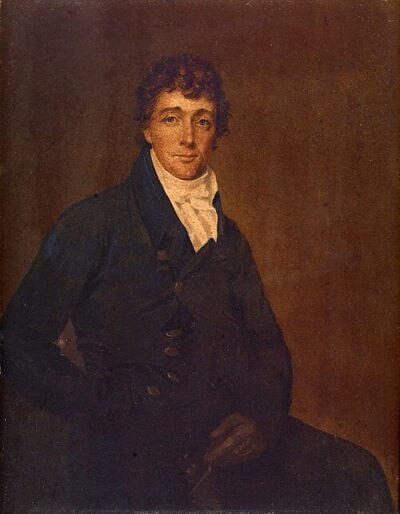
The American Colonization Society is an organization that helped in founding Liberia as a colony for freed slaves. It was founded in 1816 by Robert Finley.
- Founded
- December 21, 1816
- Founded by
- Robert Finley
- Country
- United States
All 5 facts, and where they come from
Facts
5 facts · 0 confirmed by two sources · 0 cited · 5 from one source
Where this comes from
Papalocal keeps its own record. It started from these sources; what each one said is kept here as it was copied, so a change on their side never changes this page by itself. Tap one to read its version.
What Wikidata says · copied November 17, 2026 · revision 2569205135
- Described as
- organization that helped in founding Liberia as a colony for freed slaves
- Other names
- American Society for Colonizing the Free People of Colour of the United States, ACS, The Society for the Colonization of Free People of Color of America, Society for the Colonization of Free People of Color of America
- What it is
- organization
- Founded
- December 21, 1816
- Ended
- January 1, 1964
- Founded by
- Robert Finley
- Country
- United States
- Wikipedias with a page
- 27
Wikidata item Q210911 (wikidata.org/wiki/Q210911), public domain (CC0). Copied 2026-11-17.
What Wikipedia says · copied November 17, 2026 · revision 1383359482
The American Colonization Society (ACS), initially the Society for the Colonization of Free People of Color of America, was an American organization founded in 1816 by Robert Finley to encourage and facilitate repatriation of freeborn people of color and emancipated slaves to sub-Saharan Africa, particularly the Grain Coast. It was modeled on an earlier British Committee for the Relief of the Black Poor's colonization in sub-Saharan Africa, which had sought to resettle London's black poor. Until the ACS's dissolution in 1964, the society was headquartered in Room 516 of the Colorado Building in Washington, D.C.
The American Colonization Society was established in 1816 to address the belief that free people of color could not integrate into U.S. society, and should thus relocate to Africa. The population of such free people had grown steadily following the American Revolutionary War, from 60,000 in 1790 to 300,000 by 1830. Slave owners feared these free Black people might help their slaves to escape or organize slave rebellions. In addition, many White Americans believed African Americans were inherently inferior and should be relocated.
The ACS's plan was opposed by most Black Americans and also by most of the abolitionist movement. For example, minister Jermain Loguen of Syracuse, New York stated:We recognize in it ["the scheme of African Colonization"] the most intense hatred of the colored race, clad in the garb of pretended philanthropy; and we regard the revival of colonization societies...as...manifestations of a passion fit only for demons to indulge in.
In most cases, African-American families had lived in the United States for generations, and they felt no more affinity for Africa than a white American might feel for Europe where his ancestors originated decades earlier. Contrary to claims their emigration was voluntary, many African-Americans, both free and enslaved, were pressured into emigrating. Indeed, some enslavers, such as Zephaniah Kingsley, sometimes freed their slaves on condition that the freedmen leave the country immediately.
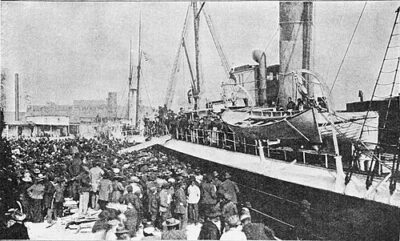
According to historian Marc Leepson, "Colonization proved to be a giant failure, doing nothing to stem the forces that brought the nation to Civil War." Between 1821 and 1847, only a few thousand African Americans, out of millions, emigrated to what would become Liberia, while the increase in Black population in the U.S. during those same years was about 500,000. By 1833, the Society had transported only 2,769 individuals out of the U.S. According to Zephaniah Kingsley, the cost of transporting the Black population of the United States to sub-Saharan Africa would exceed the annual revenues of the country. Mortality was the highest since accurate record-keeping began: close to half the arrivals in Liberia died from tropical diseases, especially malaria; during the early years, 22% of immigrants died within one year. Moreover, the provisioning and transportation of requisite tools and supplies proved very expensive.
Starting in the 1830s, the society was met with great hostility from abolitionists, led by Gerrit Smith, who had supported the society financially, and William Lloyd Garrison, author of Thoughts on African Colonization (1832), in which he proclaimed the society a fraud. According to Garrison and his many followers, the society was not a solution to the problem of American slavery—it actually was helping, and was intended to help, to preserve it.
From the Wikipedia article “American Colonization Society” (en.wikipedia.org/wiki/American_Colonization_Society), by its contributors, under CC BY-SA 4.0 (creativecommons.org/licenses/by-sa/4.0/). Copied 2026-11-17; not changed.
Confirmed Two sources agree. Cited One source, and it names where it got it. One source One source, without a reference of its own. Sources disagree The sources disagree. We show the best-supported value and keep theirs below.
Picture: Wikimedia Commons · Public domain