American Popular Revolutionary Alliance
The American Popular Revolutionary Alliance is a political party in Peru. It was founded in 1924 by Víctor Raúl Haya de la Torre. Its headquarters are in Breña. It stands for social conservatism, right-wing populism and anti-communism.
- Country
- Peru
- Founded
- May 7, 1924
- Ideology
- social conservatism
All 10 facts, and where they come from
Facts
10 facts · 0 confirmed by two sources · 0 cited · 10 from one source
Where this comes from
Papalocal keeps its own record. It started from these sources; what each one said is kept here as it was copied, so a change on their side never changes this page by itself. Tap one to read its version.
What Wikidata says · copied November 17, 2026 · revision 2565552142
- Described as
- political party in Peru
- Other names
- Peruvian Aprista Party, Partido Aprista Peruano, Alianza Popular Revolucionaria Americana, APRA
- What it is
- political party
- Founded
- May 7, 1924
- Founded by
- Víctor Raúl Haya de la Torre
- Headquarters
- Breña
- Country
- Peru
- Ideology
- social conservatism; right-wing populism; anti-communism; neoliberalism
- Official website
- http://www.apra.org.pe
- Wikipedias with a page
- 23
Wikidata item Q855669 (wikidata.org/wiki/Q855669), public domain (CC0). Copied 2026-11-17.
What Wikipedia says · copied November 17, 2026 · revision 1385563734
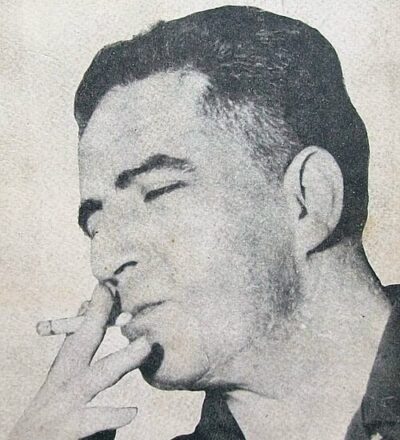
The Peruvian Aprista Party (Spanish: Partido Aprista Peruano, PAP) () is a Peruvian political party. The party was founded as the American Popular Revolutionary Alliance (Spanish: Alianza Popular Revolucionaria Americana, APRA) by Víctor Raúl Haya de la Torre, who originally intended to create a network of anti-imperialist social and political movements in Latin America. Members are called "compañeros" (roughly translated as 'partners'), based on the fraternity espoused by Haya de la Torre.
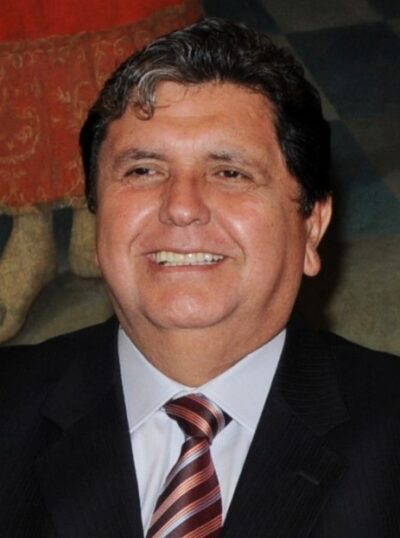
Facing international pressure from the United States, which was promoting anti-communism in the Americas, the party is said to have adopted a mild right-wing populist agenda by the 1940s. The party later adopted in 2006 a new platform as García's second presidency implemented a series of policies labelled as center-right, embracing free-market capitalism, dialogue with other right-wing parties and organizations in the country, and closer ties with the Catholic Church and Evangelical churches. A number of scholars say that the party has shifted to the right side of the left–right political spectrum.
Founded continentally in 1924 in Mexico City, Mexico, and nationally in 1930 in Lima, it is one of the oldest political parties in Latin America. Among the Peruvian political parties in activity, specifically for having been stripped of electoral victories by coups or military governments after having triumphed democratically, it also went through two long periods of illegality, both under military and civilian governments, having been persecuted by the presidencies of Luis Miguel Sánchez Cerro and Manuel A. Odría. The Peruvian Aprista Party has gained in the presidency in two occasions: in 1985 and 2006, both under the candidacy of Alan García. At parliamentary level, the party was represented uninterrupted from 1995 until 2020, falling below the electoral threshold to attain legislative representation.
Although APRA does not operate throughout Latin America as its founder envisioned for, it has served as a powerful influence for other social democratic Latin American political organizations, such as the PT in Brazil, the Democratic Action (AD) in Venezuela and the Socialist Party of Chile.
From the Wikipedia article “American Popular Revolutionary Alliance” (en.wikipedia.org/wiki/American_Popular_Revolutionary_Alliance), by its contributors, under CC BY-SA 4.0 (creativecommons.org/licenses/by-sa/4.0/). Copied 2026-11-17; not changed.
Confirmed Two sources agree. Cited One source, and it names where it got it. One source One source, without a reference of its own. Sources disagree The sources disagree. We show the best-supported value and keep theirs below.