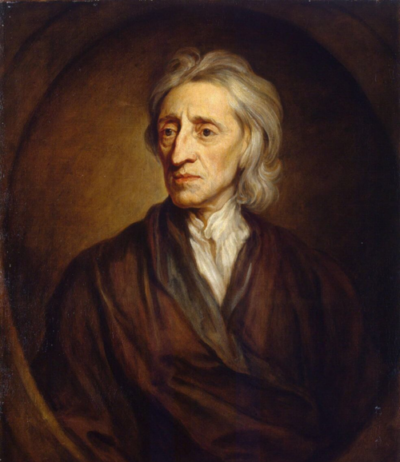
An Essay Concerning Human Understanding
An Essay Concerning Human Understanding is a book by John Locke. It came out in 1690.
- Published
- 1690
- Came out
- 1690
- Written by
- John Locke
- Genre
- philosophy
- Country of origin
- England
All 7 facts, and where they come from
Facts
7 facts · 0 confirmed by two sources · 0 cited · 7 from one source
Where this comes from
Papalocal keeps its own record. It started from these sources; what each one said is kept here as it was copied, so a change on their side never changes this page by itself. Tap one to read its version.
What Wikidata says · copied November 17, 2026 · revision 2536878273
- Described as
- book by John Locke
- What it is
- literary work
- Written by
- John Locke
- Genre
- philosophy
- Published
- 1690
- Language
- English
- Country of origin
- England · 1 reference
- Came out
- 1690
- Wikipedias with a page
- 28
Wikidata item Q482438 (wikidata.org/wiki/Q482438), public domain (CC0). Copied 2026-11-17.
What Wikipedia says · copied November 17, 2026 · revision 1384238446
An Essay Concerning Human Understanding is an essay by John Locke concerning the foundation of human knowledge and understanding. It first appeared in 1689 (although dated 1690) with the printed title An Essay Concerning Humane Understanding. He describes the mind at birth as a blank slate (tabula rasa, although he did not use those actual words) filled later through experience. The essay was one of the principal sources of empiricism in modern philosophy, and influenced many enlightenment philosophers, such as David Hume and George Berkeley.
Book I of the Essay is Locke's attempt to refute the rationalist notion of innate ideas. Book II sets out Locke's theory of ideas, including his distinction between passively acquired simple ideas—such as "red", "sweet", "round"—and actively built complex ideas, such as numbers, causes and effects, abstract ideas, ideas of substances, identity, and diversity. Locke also distinguishes between the truly existing primary qualities of bodies, like shape, motion and the arrangement of minute particles, and the secondary qualities that are "powers to produce various sensations in us" such as "red" and "sweet." These secondary qualities, Locke claims, are dependent on the primary qualities. He also offers a theory of personal identity, offering a largely psychological criterion. Book III is concerned with language, and Book IV with knowledge, including intuition, mathematics, moral philosophy, natural philosophy ("science"), faith, and opinion.
From the Wikipedia article “An Essay Concerning Human Understanding” (en.wikipedia.org/wiki/An_Essay_Concerning_Human_Understanding), by its contributors, under CC BY-SA 4.0 (creativecommons.org/licenses/by-sa/4.0/). Copied 2026-11-17; not changed.
Confirmed Two sources agree. Cited One source, and it names where it got it. One source One source, without a reference of its own. Sources disagree The sources disagree. We show the best-supported value and keep theirs below.
Picture: Wikimedia Commons: Locke Essay 1690.jpg · See Commons file page