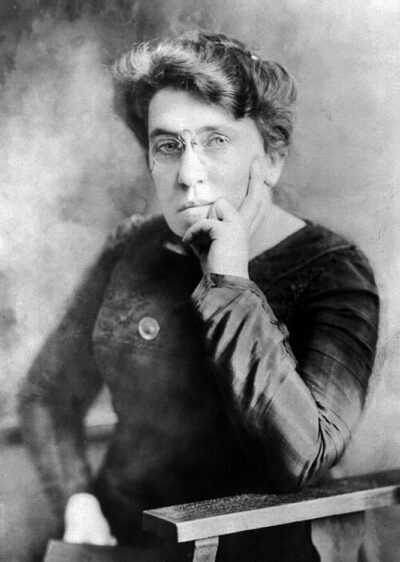
Anarchism and Other Essays
Anarchism and Other Essays is a 1910 essay by Emma Goldman.
- Published
- 1910
- Written by
- Emma Goldman
- Genre
- non-fiction literature
- Country of origin
- United States
All 8 facts, and where they come from
Facts
8 facts · 0 confirmed by two sources · 0 cited · 8 from one source
Where this comes from
Papalocal keeps its own record. It started from these sources; what each one said is kept here as it was copied, so a change on their side never changes this page by itself. Tap one to read its version.
What Wikidata says · copied November 16, 2026 · revision 2555897692
- Described as
- 1910 essay by Emma Goldman
- What it is
- literary work
- Written by
- Emma Goldman
- Genre
- non-fiction literature; essay
- Published
- 1910 · 1 reference
- Language
- English; German
- Country of origin
- United States
- Wikipedias with a page
- 9
Wikidata item Q4751627 (wikidata.org/wiki/Q4751627), public domain (CC0). Copied 2026-11-16.
What Wikipedia says · copied November 16, 2026 · revision 1384250159
Anarchism and Other Essays (1910) is a collection of essays written by Emma Goldman, first published by Mother Earth Publishing Association. The essays outline Goldman's anarchist views on a number of subjects, most notably the oppression of women and perceived shortcomings of first wave feminism, but also prisons, political violence, sexuality, religion, nationalism and art theory. Hippolyte Havel contributed a short biography of Goldman to the anthology. The essays were adapted from lectures Goldman had given on fundraising tours for her journal Mother Earth. Anarchism and Other Essays was Goldman's first published book. "The Traffic in Women" has received particular attention from feminist scholars since the book's publication.
From the Wikipedia article “Anarchism and Other Essays” (en.wikipedia.org/wiki/Anarchism_and_Other_Essays), by its contributors, under CC BY-SA 4.0 (creativecommons.org/licenses/by-sa/4.0/). Copied 2026-11-16; not changed.
Confirmed Two sources agree. Cited One source, and it names where it got it. One source One source, without a reference of its own. Sources disagree The sources disagree. We show the best-supported value and keep theirs below.
Picture: Wikimedia Commons: Anarchismandotheressays.jpg · See Commons file page