Ancients
Ancients is a group of English artists who admired William Blake. It was founded in 1824.
- Founded
- 1824
All 2 facts, and where they come from
Facts
2 facts · 0 confirmed by two sources · 1 cited · 1 from one source
Where this comes from
Papalocal keeps its own record. It started from these sources; what each one said is kept here as it was copied, so a change on their side never changes this page by itself. Tap one to read its version.
What Wikidata says · copied November 18, 2026 · revision 2499295982
- Described as
- group of English artists who admired William Blake
- Other names
- The Ancients, Shoreham Ancients
- What it is
- art group · 1 reference
- Founded
- 1824
- Wikipedias with a page
- 5
Wikidata item Q4752989 (wikidata.org/wiki/Q4752989), public domain (CC0). Copied 2026-11-18.
What Wikipedia says · copied November 18, 2026 · revision 1297811796
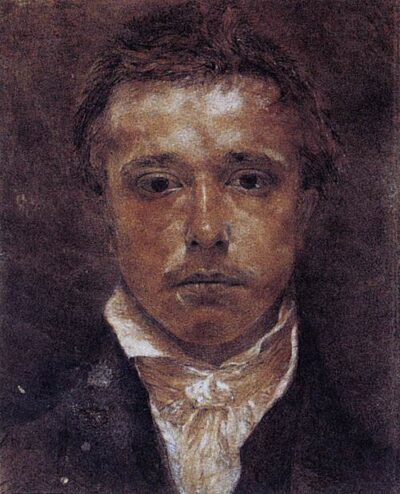
The Ancients (also known as the Shoreham Ancients) were a group of young English artists and others who were brought together around 1824 by their attraction to archaism in art and admiration for the work of William Blake (1757–1827), who was a generation or two older than the group. The core members of the Ancients were Samuel Palmer, George Richmond, and Edward Calvert. Except for Palmer, the central members who were artists were all students at the Royal Academy of Arts. They met in Blake's apartment, dubbed the "House of Interpreter" and at the home of Samuel Palmer in the Kent village of Shoreham. The Ancients made little impact on the English artistic scene during the ten years or so that the group continued, but several members were later significant artists, and interest in the group has gradually increased since the late 19th century.
They were the first English manifestation of the formalised artistic "brotherhood", an artistic movement whose aims included elements of communal living and promotion of a general vision for society. Continental groups of this sort included the German Nazarene movement and the Barbus in Paris, and the most successful later English example was to be the Pre-Raphaelite Brotherhood. Like these groups they represented an oppositional break-away from the academic art establishment, and looked back to an idealized version of the past. They pursued equality among their members as a reaction to the hierarchical structure of the conventional art world. Like Nazarenes and Barbus, they promoted the wearing of special revivalist costume, though only Palmer seems often to have worn it in practice; it seems to be shown in some portraits of Palmer by Richmond such as the bust-length miniature and chalk drawing (1829, both National Portrait Gallery), which shows a round-necked pleated smock under a coat with a loose untidy collar and lapels, combined with somewhat Christ-like long hair and a beard. The Ancients were probably aware of the Nazarenes, but probably not of the Barbus.
From the Wikipedia article “Ancients (art group)” (en.wikipedia.org/wiki/Ancients_(art_group)), by its contributors, under CC BY-SA 4.0 (creativecommons.org/licenses/by-sa/4.0/). Copied 2026-11-18; not changed.
Confirmed Two sources agree. Cited One source, and it names where it got it. One source One source, without a reference of its own. Sources disagree The sources disagree. We show the best-supported value and keep theirs below.