Anders
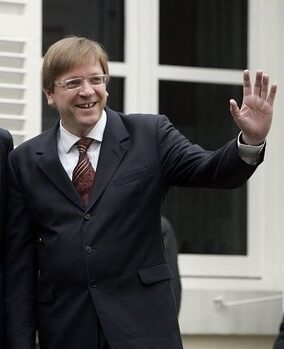
Anders is a political party. It was founded in 1992 by Guy Verhofstadt. Its headquarters are in Brussels. It stands for conservative liberalism, pro-Europeanism and liberalism.
- Country
- Belgium
- Founded
- 1992
- Ideology
- conservative liberalism
- Chair
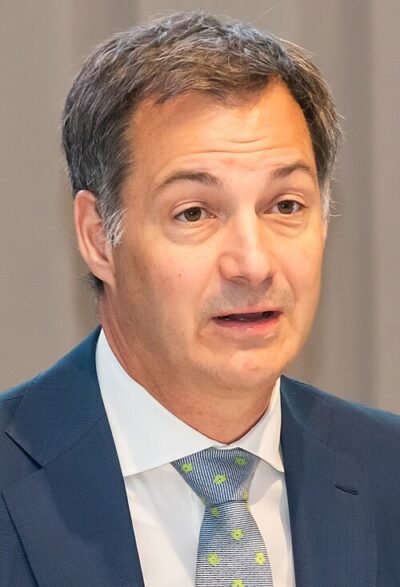
- Frédéric De Gucht (2025–)
All 12 facts, and where they come from
Facts
12 facts · 0 confirmed by two sources · 2 cited · 10 from one source
Where this comes from
Papalocal keeps its own record. It started from these sources; what each one said is kept here as it was copied, so a change on their side never changes this page by itself. Tap one to read its version.
What Wikidata says · copied November 16, 2026 · revision 2559647443
- Described as
- political party from Flanders, Belgium
- Other names
- Open Flemish Liberals and Democrats, Open VLD, VLD, Vlaamse Liberalen en Democraten, Open Vlaamse Liberalen en Democraten, 🔵Anders
- What it is
- political party
- Founded
- 1992
- Founded by
- Guy Verhofstadt · 1 reference
- Headquarters
- Brussels
- Country
- Belgium
- Chair
- Gwendolyn Rutten (2012–2020); Egbert Lachaert (2020–2023)
- Ideology
- conservative liberalism; pro-Europeanism; liberalism · 1 reference; neoliberalism · 1 reference
- Official website
- https://www.anders.be/ · 1 reference
- Wikipedias with a page
- 33
Wikidata item Q1160192 (wikidata.org/wiki/Q1160192), public domain (CC0). Copied 2026-11-16.
What Wikipedia says · copied November 16, 2026 · revision 1380900272
Anders (Dutch: [ˈɑndərs] , lit. ''Different''), formerly known as the Open Flemish Liberals and Democrats (Dutch: Open Vlaamse Liberalen en Democraten, [ˈoːpə(ɱ) ˈvlaːmsə libəˈraːlən ɛn deːmoːˈkraːtə(n), -lə ʔɛn -] , Open VLD), is a Flemish liberal political party in Belgium. Politically liberal, the party has been described as centre-right, and has smaller factions within the party that have conservative liberal, as well as social liberal views. The party is a member of the Liberal Group, Renew Europe, and Liberal International. On 19 January 2026, its current name was adopted.
The party was created in 1992 from the former bilingual Party for Freedom and Progress (PVV) and politicians from other parties after Belgium was reconstituted as a federal state based on language, with the French-speaking faction forming the Reformist Movement (MR) in Wallonia. The party led the government for three cabinets under Guy Verhofstadt from 1999 until March 2008. Open VLD then formed the federal government (the "Swedish government") with the New Flemish Alliance (N-VA), Christian Democratic and Flemish (CD&V), and MR.
In the Flemish Parliament, the VLD formed a coalition government with sp.a-Spirit and CD&V from after the 2004 Belgian regional elections until the 2009 Belgian regional elections. Open Vld was a member of the Leterme I Government formed on 22 March 2008, the Van Rompuy I Government formed on 2 January 2009, the Leterme II Government formed on 24 November 2009, and the Di Rupo Government formed on 6 December 2011.
Ideologically, Open VLD started as an economically liberal, in the mold of Thatcherism, which mirrored some of the original ideology of the PVV. The VLD rapidly became more centrist and gave up much of its free-market approach, partly under the influence of Verhofstadt's political scientist brother Dirk Verhofstadt. The VLD continued to contain conservative-libertarian and classical liberal wings with ties to think-tanks like Nova Civitas. Party chairman Bart Somers called in November 2006 for a "revolution" within the party, saying that "a liberal party", like the VLD, "can be only progressive and social".
From 2000 to 2004, during the second period of its participation in the Belgian federal government and under Belgian Prime Minister Verhofstadt, the VLD allegedly lost most of its ideological appeal. Several of its thinkers such as former member and Nova Civitas president Boudewijn Bouckaert heavily criticized the party. Many others, particularly from the party's conservative and Flemish autonomist wing, resented the priority it placed on the "Belgian compromise", which enabled the Socialist Party (PS) of the French Community of Belgium to gain a dominant position in the formulation of Belgian federal government policy.
In 2004, the VLD teamed up with the minority social-liberal party Vivant for both the Flemish and European elections. VLD-Vivant lost the elections to arch rivals CD&V and the Flemish Bloc. The VLD fell from second to third place among the Flemish political parties, slipping narrowly behind the sp.a-Spirit cartel. Internal feuds, the support for electoral rights for immigrants, and an unsuccessful economic policy were seen as the main reasons for its election defeat. From 2007, the party kept having electoral difficulties, first due to competition from split-off List Dedecker and after 2010 from the liberal-conservative Flemish nationalist party N-VA.
From the Wikipedia article “Anders (political party)” (en.wikipedia.org/wiki/Anders_(political_party)), by its contributors, under CC BY-SA 4.0 (creativecommons.org/licenses/by-sa/4.0/). Copied 2026-11-16; not changed.
Confirmed Two sources agree. Cited One source, and it names where it got it. One source One source, without a reference of its own. Sources disagree The sources disagree. We show the best-supported value and keep theirs below.