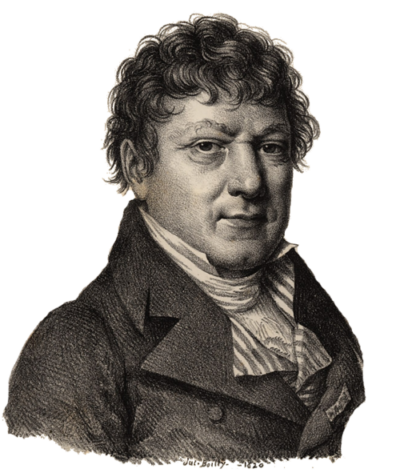
Arc measurement of Delambre and Méchain
Arc measurement of Delambre and Méchain is a Geodetic survey from 1792 to 1798.
All 1 facts, and where they come from
Facts
1 facts · 0 confirmed by two sources · 0 cited · 1 from one source
Where this comes from
Papalocal keeps its own record. It started from these sources; what each one said is kept here as it was copied, so a change on their side never changes this page by itself. Tap one to read its version.
What Wikidata says · copied November 17, 2026 · revision 2375709751
- Described as
- Geodetic survey from 1792 to 1798
- Other names
- Meridian arc of Delambre and Méchain
- What it is
- discovery
- Wikipedias with a page
- 3
Wikidata item Q3071693 (wikidata.org/wiki/Q3071693), public domain (CC0). Copied 2026-11-17.
What Wikipedia says · copied November 17, 2026 · revision 1382786434
The arc measurement of Delambre and Méchain was a geodetic survey carried out by Jean-Baptiste Delambre and Pierre Méchain in 1792–1798 to measure an arc section of the Paris meridian between Dunkirk and Barcelona. This arc measurement served as part of the basis for the original definition of the metre.
Until the French Revolution of 1789, France was particularly affected by the proliferation of length measures; the conflicts related to units helped precipitate the revolution. In addition to rejecting standards inherited from feudalism, linking determination of a decimal unit of length with the figure of the Earth was an explicit goal. This project culminated in an immense effort to measure a meridian passing through Paris in order to define the metre.
When question of measurement reform was placed in the hands of the French Academy of Sciences, a commission, whose members included Jean-Charles de Borda, Joseph-Louis Lagrange, Pierre-Simon Laplace, Gaspard Monge and the Marquis de Condorcet, decided that the new measure should be equal to one ten-millionth of the distance from the North Pole to the Equator (the quadrant of the Earth's circumference), measured along the meridian passing through Paris at the longitude of Paris Observatory. Since this survey, the Panthéon became the central geodetic station in Paris.
In 1791, Jean Baptiste Joseph Delambre and Pierre Méchain were commissioned to lead an expedition to accurately measure the distance between a belfry in Dunkerque and Montjuïc castle in Barcelona in order to calculate the length of the meridian arc through the centre of Paris Observatory. The official length of the Mètre des Archives was based on these measurements, but the definitive length of the metre required a value for the non-spherical shape of the Earth, known as the flattening of the Earth. Pierre Méchain's and Jean-Baptiste Delambre's measurements were combined with the results of the French Geodetic Mission to the Equator and a value of 1/334 was found for the Earth's flattening.
The distance from the North Pole to the Equator was then extrapolated from the measurement of the Paris meridian arc between Dunkirk and Barcelona and the length of the metre was established, in relation to the Toise de l'Académie also called toise of Peru, which had been constructed in 1735 for the French Geodesic Mission to Peru, as well as to Borda's double-toise N°1, one of the four twelve feet (French: pieds) long ruler, part of the baseline measuring instrument devised for this survey.
When the final result was known, the Mètre des Archives a platinum bar whose length was closest to the meridional definition of the metre was selected and placed in the National Archives on 22 June 1799 (4 messidor An VII in the Republican calendar) as a permanent record of the result.
From the Wikipedia article “Arc measurement of Delambre and Méchain” (en.wikipedia.org/wiki/Arc_measurement_of_Delambre_and_Méchain), by its contributors, under CC BY-SA 4.0 (creativecommons.org/licenses/by-sa/4.0/). Copied 2026-11-17; not changed.
Confirmed Two sources agree. Cited One source, and it names where it got it. One source One source, without a reference of its own. Sources disagree The sources disagree. We show the best-supported value and keep theirs below.