Archæologia Britannica
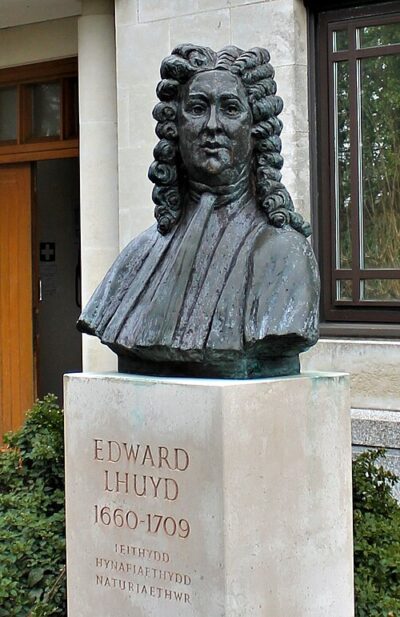
Archæologia Britannica is a pioneering study of the Celtic languages by Edward Lhuyd.
- Written by
- Edward Lhuyd
All 2 facts, and where they come from
Facts
2 facts · 0 confirmed by two sources · 0 cited · 2 from one source
Where this comes from
Papalocal keeps its own record. It started from these sources; what each one said is kept here as it was copied, so a change on their side never changes this page by itself. Tap one to read its version.
What Wikidata says · copied November 18, 2026 · revision 2568654213
- Described as
- pioneering study of the Celtic languages by Edward Lhuyd
- What it is
- book
- Written by
- Edward Lhuyd · 1 reference
- Wikipedias with a page
- 2
Wikidata item Q110323857 (wikidata.org/wiki/Q110323857), public domain (CC0). Copied 2026-11-18.
What Wikipedia says · copied November 18, 2026 · revision 1384479712
Archæologia Britannica (from Latin: Antiquities of Britain), the first volume of which was published in 1707, is a pioneering study of the Celtic languages written by Edward Lhuyd.
Following an extensive tour of Great Britain and Ireland lasting more than four years, Lhuyd began work on Glossography, the first volume of a planned four-volume set, Archæologia Britannica, which combined innovative methods of historical linguistics, language comparison, and field research, to establish a genetic relationship between the Welsh, Cornish, Breton, Irish, Scottish Gaelic, and Gaulish languages. After a significant delay, the Glossography was finally published in 1707.
Due to Lhuyd's early death at the age of 49, the last three volumes were never completed, and many of Lhuyd's manuscripts and research notes were later lost, destroyed in two separate fires. As the only completed volume, the Glossography itself is often referred to as Archæologia Britannica.
From the Wikipedia article “Archæologia Britannica” (en.wikipedia.org/wiki/Archæologia_Britannica), by its contributors, under CC BY-SA 4.0 (creativecommons.org/licenses/by-sa/4.0/). Copied 2026-11-18; not changed.
Confirmed Two sources agree. Cited One source, and it names where it got it. One source One source, without a reference of its own. Sources disagree The sources disagree. We show the best-supported value and keep theirs below.