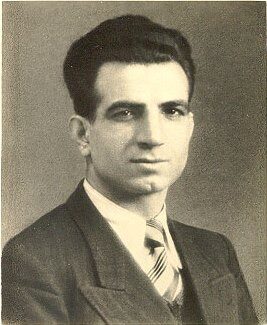
Armenian Relief Committee - French section
Armenian Relief Committee - French section is a communist, pro-Soviet organization. It was founded in 1925 by Kourken Tahmazian. Its headquarters are in Paris. It stands for communism.
All 9 facts, and where they come from
Facts
9 facts · 0 confirmed by two sources · 0 cited · 9 from one source
Where this comes from
Papalocal keeps its own record. It started from these sources; what each one said is kept here as it was copied, so a change on their side never changes this page by itself. Tap one to read its version.
What Wikidata says · copied November 17, 2026 · revision 2383775556
- Described as
- communist, pro-Soviet organization
- What it is
- organization
- Founded
- 1925
- Ended
- 1937
- Founded by
- Kourken Tahmazian
- Headquarters
- Paris
- Located in
- Paris
- Country
- France
- Part of
- Armenian Relief Committee
- Ideology
- communism
- Wikipedias with a page
- 2
Wikidata item Q90838008 (wikidata.org/wiki/Q90838008), public domain (CC0). Copied 2026-11-17.
What Wikipedia says · copied November 17, 2026 · revision 1348291751
The French branch of the Armenian Relief Committee (Armenian: Hay(astali) Oknoutian Gomidé, HOG) was established in 1925 to foster closer ties between the Armenian diaspora in France and Soviet Armenia, while also providing support to Armenian communists in France. From its inception in 1925 until its dissolution in 1937, the organization played a pivotal role in shaping the Armenian labor movement in France. It aligned itself with the French Communist Party (PCF) and played a role in publishing and supporting numerous periodicals. It also conducted training programs for activists, notably Missak Manouchian, and claimed up to 3,500 members across France.
From the Wikipedia article “French branch of the Armenian Relief Committee” (en.wikipedia.org/wiki/French_branch_of_the_Armenian_Relief_Committee), by its contributors, under CC BY-SA 4.0 (creativecommons.org/licenses/by-sa/4.0/). Copied 2026-11-17; not changed.
Confirmed Two sources agree. Cited One source, and it names where it got it. One source One source, without a reference of its own. Sources disagree The sources disagree. We show the best-supported value and keep theirs below.