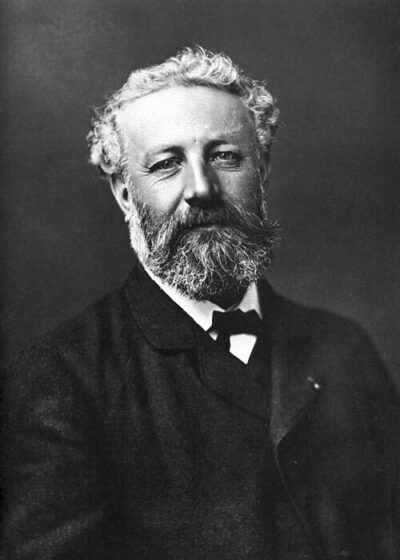
Around the World in Eighty Days
Around the World in Eighty Days is a novel by Jules Verne. It came out in 1872. It is part of Voyages Extraordinaires.
- Published
- 1872
- Came out
- 1872
- Written by
- Jules Verne
- Genre
- serialized fiction
- Country of origin
- France
All 12 facts, and where they come from
Facts
12 facts · 0 confirmed by two sources · 2 cited · 10 from one source
Where this comes from
Papalocal keeps its own record. It started from these sources; what each one said is kept here as it was copied, so a change on their side never changes this page by itself. Tap one to read its version.
What Wikidata says · copied November 17, 2026 · revision 2565325885
- Described as
- novel by Jules Verne
- Other names
- Around the world in 80 days
- What it is
- literary work
- Written by
- Jules Verne · 1 reference
- Genre
- serialized fiction; adventure fiction; children's fiction
- Published
- 1872 · 1 reference
- Language
- French
- Country of origin
- France
- Part of the series
- Voyages Extraordinaires
- Comes after
- The Fur Country · 1 reference
- Followed by
- The Mysterious Island
- Came out
- 1872
- Wikipedias with a page
- 79
Wikidata item Q1219561 (wikidata.org/wiki/Q1219561), public domain (CC0). Copied 2026-11-17.
What Wikipedia says · copied November 17, 2026 · revision 1384275388
Around the World in Eighty Days (French: Le Tour du monde en quatre-vingts jours) is an adventure novel by the French writer Jules Verne, first published in French in 1872. In the story, Phileas Fogg of London and his newly employed French valet Jean Passepartout attempt to circumnavigate the world in 80 days on a wager of £20,000 (equivalent to £2.5 million in 2024) set by his friends at the Reform Club. It is one of Verne's most acclaimed works.
From the Wikipedia article “Around the World in Eighty Days” (en.wikipedia.org/wiki/Around_the_World_in_Eighty_Days), by its contributors, under CC BY-SA 4.0 (creativecommons.org/licenses/by-sa/4.0/). Copied 2026-11-17; not changed.
Confirmed Two sources agree. Cited One source, and it names where it got it. One source One source, without a reference of its own. Sources disagree The sources disagree. We show the best-supported value and keep theirs below.
Picture: Wikimedia Commons: Verne Tour du Monde.jpg · See Commons file page