Arzelà–Ascoli theorem
Arzelà–Ascoli theorem is a theorem.
All 3 facts, and where they come from
Facts
3 facts · 0 confirmed by two sources · 2 cited · 1 from one source
Where this comes from
Papalocal keeps its own record. It started from these sources; what each one said is kept here as it was copied, so a change on their side never changes this page by itself. Tap one to read its version.
What Wikidata says · copied November 19, 2026 · revision 2541223556
- Described as
- theorem
- Other names
- Ascoli-Arzelà theorem, Ascoli-Arzela theorem
- What it is
- theorem
- Named after
- Giulio Ascoli · 1 reference; Cesare Arzelà · 1 reference
- Wikipedias with a page
- 16
Wikidata item Q1477053 (wikidata.org/wiki/Q1477053), public domain (CC0). Copied 2026-11-19.
What Wikipedia says · copied November 19, 2026 · revision 1378400393
The Arzelà–Ascoli theorem is a fundamental result of mathematical analysis giving necessary and sufficient conditions to decide whether every sequence of a given family of real-valued continuous functions defined on a closed and bounded interval has a uniformly convergent subsequence. The main condition is the equicontinuity of the family of functions. The theorem is the basis of many proofs in mathematics, including that of the Peano existence theorem in the theory of ordinary differential equations, Montel's theorem in complex analysis, and the Peter–Weyl theorem in harmonic analysis and various results concerning compactness of integral operators.
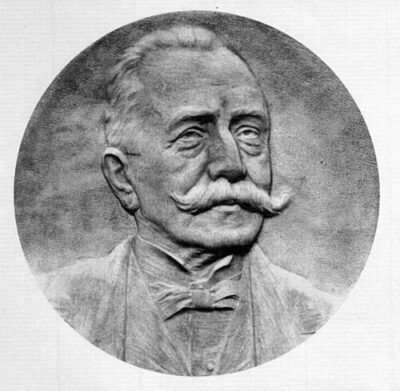
The notion of equicontinuity was introduced in the late 19th century by the Italian mathematicians Cesare Arzelà and Giulio Ascoli. A weak form of the theorem was proven by Ascoli (1883–1884), who established the sufficient condition for compactness, and by Arzelà (1895), who established the necessary condition and gave the first clear presentation of the result. A further generalization of the theorem was proven by Fréchet (1906), to sets of real-valued continuous functions with domain a compact metric space (Dunford & Schwartz 1958, p. 382). Modern formulations of the theorem allow for the domain to be compact Hausdorff and for the range to be an arbitrary metric space. More general formulations of the theorem exist that give necessary and sufficient conditions for a family of functions from a compactly generated Hausdorff space into a uniform space to be compact in the compact-open topology; see Kelley (1991, page 234).
From the Wikipedia article “Arzelà–Ascoli theorem” (en.wikipedia.org/wiki/Arzelà–Ascoli_theorem), by its contributors, under CC BY-SA 4.0 (creativecommons.org/licenses/by-sa/4.0/). Copied 2026-11-19; not changed.
Confirmed Two sources agree. Cited One source, and it names where it got it. One source One source, without a reference of its own. Sources disagree The sources disagree. We show the best-supported value and keep theirs below.