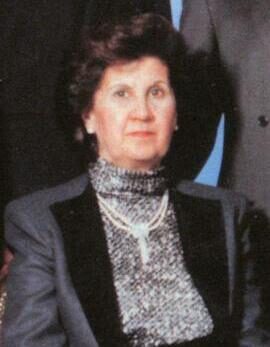
Assad family
Assad family is a family of Syrian politicians.
- Country
- Syria
All 2 facts, and where they come from
Facts
2 facts · 0 confirmed by two sources · 0 cited · 2 from one source
Where this comes from
Papalocal keeps its own record. It started from these sources; what each one said is kept here as it was copied, so a change on their side never changes this page by itself. Tap one to read its version.
What Wikidata says · copied November 18, 2026 · revision 2559241453
- Described as
- family of Syrian politicians
- Other names
- Assad dynasty, The Assads, al-Assad family
- What it is
- political family
- Country
- Syria
- Wikipedias with a page
- 21
Wikidata item Q2087185 (wikidata.org/wiki/Q2087185), public domain (CC0). Copied 2026-11-18.
What Wikipedia says · copied November 18, 2026 · revision 1386058642
The Assad family ruled Syria from 1970 to 2024, spanning the rule of Hafez al-Assad and his son, Bashar al-Assad. From 1963 until the collapse of Ba'athist rule in 2024, Syria was governed by the Ba'ath Party, and under the Assad family from 1971 onward, it became a totalitarian hereditary dictatorship. The Assad family was referred to as the Assad dynasty.
The Assad family originated from Qardaha, in the Latakia Sanjak of the Ottoman Empire. They belonged to the Alawite Kalbiyya tribe. In 1927, Ali Sulayman al-Wahsh, Hafez al-Assad's father, who was born in 1875 and lived in the village of Qardaha in the Syrian coastal mountains, changed his surname from al-Wahsh, Arabic for "the savage", to al-Assad, meaning "the lion". This change was possibly connected to his social standing as a local mediator and his political activities. All members of the extended Assad family descended from Ali Sulayman and his second wife, Naissa, who came from a village in the Syrian Coastal Mountains.
The Assad family's rule began when Hafez al-Assad seized power in the 1970 coup d'état. He became president in 1971 under the Syrian Ba'ath Party following a sham election and ruled until his death in 2000. He was succeeded by his son, Bashar al-Assad, who maintained a similar grip on power until he was ousted on 8 December 2024 during a major offensive by opposition forces. During his early reign in the 1970s, Hafez al-Assad created patronage networks of Ba'ath party elites loyal to his family. Members of the Assad family established control over vast swathes of the Syrian economy, and corruption became endemic in the public and private sectors. After Hafez's death, family connections continued to be important in Syrian politics. Several close family members of Hafez also held vital positions in the government since his rise to power, an arrangement which existed until the fall of the Assad regime. The Syrian bureaucracy and business community were also dominated by members of the Assad family and individuals affiliated with them.
The Assad family is affiliated with the Alawite sect, a syncretic religious tradition with links to early Shi'ism. Since coming to power in 1970, the Assad family has traditionally relied on support from Alawite communities as an important component of its political rule. Many Alawites were appointed to key positions in the bureaucracy, security forces, military, judiciary, and other state institutions, helping consolidate the Assad family's grip on power. Hafez al-Assad built his regime into a bureaucracy that was marked by a cult of personality. Images, portraits, quotes and praises of Assad are displayed everywhere from schools to public markets and government offices. Hafez was referred to as the "Immortal Leader" and the al-Muqaddas ("Sanctified One") in official Assadist ideology. Hafez re-organised Syrian society in militaristic lines and persistently invoked conspiratorial rhetoric on the dangers of foreign-backed plots abetted by fifth columnists and promoted the armed forces as a central aspect of public life. After Hafez al-Assad's death, his son and successor Bashar al-Assad inherited the existing personality cult, with the party hailing him as the "Young Leader" and "Hope of the People". Drawing influence from the veneration of the Kim dynasty in North Korea's hereditary leadership model led by Kim Il Sung, official propaganda in Syria ascribed divine features to the Assad family and revered the Assad patriarchs as the founding fathers of modern Syria.
Opposition to the Assad family's rule coalesced into the Syrian Civil War, which began on 15 March 2011. On 8 December 2024, Bashar al-Assad was reported to have fled Damascus, signalling the end of the Assad family's rule in Syria. Following the fall of the Assad regime, Bashar al-Assad and his family, including his wife Asma al-Assad, fled to Moscow, Russia. However, remnants and loyalists of the Assad regime subsequently engaged in a conflict against the new Syrian government.
From the Wikipedia article “Assad family” (en.wikipedia.org/wiki/Assad_family), by its contributors, under CC BY-SA 4.0 (creativecommons.org/licenses/by-sa/4.0/). Copied 2026-11-18; not changed.
Confirmed Two sources agree. Cited One source, and it names where it got it. One source One source, without a reference of its own. Sources disagree The sources disagree. We show the best-supported value and keep theirs below.
Picture: Wikimedia Commons: Al Assad family.jpg · See Commons file page