Association for Contemporary Music
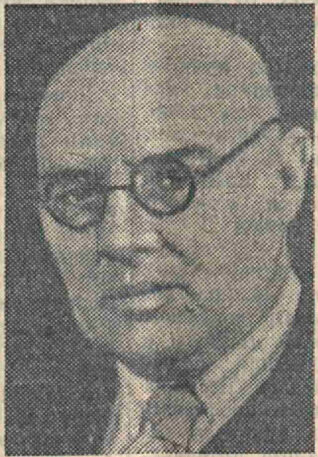
Association for Contemporary Music is an organization of Russian composers interested in avant-garde music founded by Nikolai Roslavets in 1924.
- Founded
- 1924
- Founded by
- Nikolai Roslavets
- Country
- Soviet Union
All 8 facts, and where they come from
Facts
8 facts · 0 confirmed by two sources · 2 cited · 6 from one source
Where this comes from
Papalocal keeps its own record. It started from these sources; what each one said is kept here as it was copied, so a change on their side never changes this page by itself. Tap one to read its version.
What Wikidata says · copied November 18, 2026 · revision 2552015768
- Described as
- organization of Russian composers interested in avant-garde music founded by Nikolai Roslavets in 1924
- What it is
- music organization; defunct organization
- Founded
- 1924 · 2 references
- Ended
- 1932
- Founded by
- Nikolai Roslavets
- Country
- Soviet Union
- Chair
- Borys Liatoshynsky
- Part of
- International Society for Contemporary Music · 1 reference
- Wikipedias with a page
- 8
Wikidata item Q2377812 (wikidata.org/wiki/Q2377812), public domain (CC0). Copied 2026-11-18.
What Wikipedia says · copied November 18, 2026 · revision 1278259751
Association for Contemporary Music (ACM) (Russian: ACM - Ассоциация Современной Музыки, ASM - Assotsiatsiya Sovremennoy Muzyki) was an alternative organization of Russian composers interested in avant-garde music. It was founded by Nikolai Roslavets in 1923. ACM ran concert series and published magazines promoting the modernist music of Mahler, Schoenberg, Berg, Webern, Krenek, and Hindemith, as well as the work of its members. Its leading members were Dmitri Shostakovich, Nikolai Myaskovsky, Vissarion Shebalin, Alexander Mosolov, Gavriil Popov, and Vladimir Shcherbachev. The organization's enthusiasm for avant-garde Western music and for experimentation met with opposition from the Russian Association of Proletarian Musicians (RAPM), which by the late 1920s had eclipsed the ACM in terms of cultural influence. ACM was formally disbanded in 1931,
whereas RAPM existed until 23 April 1932, when it was abolished by the Decree on the Reformation of Literary and Artistic Organizations.
Russia's New ACM (or ACM-2), the revival of the previous organization, was established in Moscow in 1990. Its chairman was composer Edison Denisov. The co-founders of the new ACM were Elena Firsova, Dmitri Smirnov, and Nikolai Korndorf. Its members included Leonid Hrabovsky, Alexander Knaifel, Sergei Pavlenko, Alexander Voustin, Vladislav Shoot, Viktor Yekimovsky, Faraj Karayev, Vyacheslav Artyomov, Vladimir Tarnopolsky, Alexander Raskatov, Ivan Sokolov, and Yuri Kasparov. Eminent composers like Sofia Gubaidulina, Alfred Schnittke, Valentin Silvestrov, and Tigran Mansuryan were invited to join the ACM. ACM became affiliated with the International Society for Contemporary Music (ISCM).
After the collapse of the Soviet Union in 1991, many members of the ACM emigrated to the West, and Denisov died in 1996. The ACM was split into two parts. One, based in the Union of Composers and led by Victor Yekimovsky, adopted the title "Russian National Section, the International Society for Contemporary Music" (RNS-ISCM); it supported the "Moscow Contemporary Music Ensemble". The other, based in the Moscow Conservatory and led by Vladimir Tarnopolsky, took the name "Centre for Contemporary Music, Moscow" (CCMM). CCMM was the ISCM Associate Member, and supported the "Studio of New Music".
From the Wikipedia article “Association for Contemporary Music” (en.wikipedia.org/wiki/Association_for_Contemporary_Music), by its contributors, under CC BY-SA 4.0 (creativecommons.org/licenses/by-sa/4.0/). Copied 2026-11-18; not changed.
Confirmed Two sources agree. Cited One source, and it names where it got it. One source One source, without a reference of its own. Sources disagree The sources disagree. We show the best-supported value and keep theirs below.