Avrami equation
Avrami equation is an equation that describes how solids transform from one phase to another at constant temperature.
All 3 facts, and where they come from
Facts
3 facts · 0 confirmed by two sources · 0 cited · 3 from one source
Where this comes from
Papalocal keeps its own record. It started from these sources; what each one said is kept here as it was copied, so a change on their side never changes this page by itself. Tap one to read its version.
What Wikidata says · copied November 17, 2026 · revision 2515887665
- Described as
- equation that describes how solids transform from one phase to another at constant temperature
- What it is
- equation
- Named after
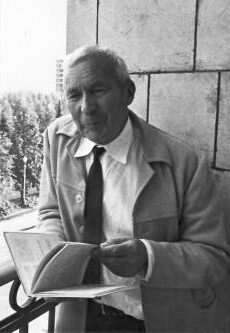
- Andrey Kolmogorov; Robert Franklin Mehl
- Wikipedias with a page
- 12
Wikidata item Q902606 (wikidata.org/wiki/Q902606), public domain (CC0). Copied 2026-11-17.
What Wikipedia says · copied November 17, 2026 · revision 1359304771
The Avrami equation describes how solids transform from one phase to another at constant temperature. It can specifically describe the kinetics of crystallisation, can be applied generally to other changes of phase in materials, like chemical reaction rates, and can even be meaningful in analyses of ecological systems.
The equation is also known as the Johnson–Mehl–Avrami–Kolmogorov (JMAK) equation. The equation was first derived by Johnson, Mehl, Avrami and Kolmogorov (in Russian) in a series of articles published in the Journal of Chemical Physics between 1939 and 1941. Moreover, Kolmogorov treated statistically the crystallization of a solid in 1937 .
From the Wikipedia article “Avrami equation” (en.wikipedia.org/wiki/Avrami_equation), by its contributors, under CC BY-SA 4.0 (creativecommons.org/licenses/by-sa/4.0/). Copied 2026-11-17; not changed.
Confirmed Two sources agree. Cited One source, and it names where it got it. One source One source, without a reference of its own. Sources disagree The sources disagree. We show the best-supported value and keep theirs below.