AWK
AWK is a data-driven programming language made by Alfred Aho, Peter Weinberger and Brian Kernighan. It came out in 1977. It was made by Peter J. Weinberger.
- Came out
- 1977
- Made by
- Alfred Aho
All 9 facts, and where they come from
Facts
9 facts · 0 confirmed by two sources · 3 cited · 6 from one source
Where this comes from
Papalocal keeps its own record. It started from these sources; what each one said is kept here as it was copied, so a change on their side never changes this page by itself. Tap one to read its version.
What Wikidata says · copied November 17, 2026 · revision 2547641373
- Described as
- data-driven programming language made by Alfred Aho, Peter Weinberger and Brian Kernighan
- Other names
- awk, Awk
- What it is
- standard UNIX utility or command · 1 reference; scripting language; external domain-specific language
- Made by
- Alfred Aho; Brian Kernighan; Peter J. Weinberger
- Came out
- 1977
- Named after
- Alfred Aho · 1 reference; Brian Kernighan · 1 reference
- Wikipedias with a page
- 53
Wikidata item Q213970 (wikidata.org/wiki/Q213970), public domain (CC0). Copied 2026-11-17.
What Wikipedia says · copied November 17, 2026 · revision 1375305667
AWK () is a scripting language designed for text processing and typically used as a data extraction and reporting tool. Like sed and grep, it is a filter, and it is a standard feature of most Unix-like operating systems. The shell command that runs the AWK processor is named awk.
The AWK language is a data-driven scripting language consisting of a set of actions to be taken against streams of textual data – either run directly on files or used as part of a pipeline – for purposes of extracting or transforming text, such as producing formatted reports. The language extensively uses the string datatype, associative arrays (that is, arrays indexed by key strings), and regular expressions. While AWK has a limited intended application domain and was especially designed to support one-liner programs, the language is Turing-complete, and even the early Bell Labs users of AWK often wrote well-structured large AWK programs.
AWK was created at Bell Labs in the 1970s, and its name is derived from the surnames of its authors: Alfred Aho (author of egrep), Peter Weinberger (who worked on tiny relational databases), and Brian Kernighan. The acronym is pronounced the same as the name of the bird species auk, which is illustrated on the cover of The AWK Programming Language.
From the Wikipedia article “AWK” (en.wikipedia.org/wiki/AWK), by its contributors, under CC BY-SA 4.0 (creativecommons.org/licenses/by-sa/4.0/). Copied 2026-11-17; not changed.
Confirmed Two sources agree. Cited One source, and it names where it got it. One source One source, without a reference of its own. Sources disagree The sources disagree. We show the best-supported value and keep theirs below.
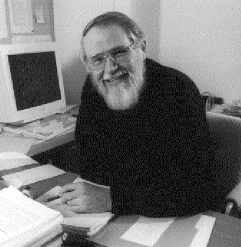
Picture: VectorVoyager, via Wikimedia Commons · CC BY-SA 4.0