Axial Age
Axial Age is a pivotal age characterizing history and philosophy from the 8th to 3rd centuries BCE.
All 2 facts, and where they come from
Facts
2 facts · 0 confirmed by two sources · 0 cited · 2 from one source
Where this comes from
Papalocal keeps its own record. It started from these sources; what each one said is kept here as it was copied, so a change on their side never changes this page by itself. Tap one to read its version.
What Wikidata says · copied November 17, 2026 · revision 2549992347
- Described as
- pivotal age characterizing history and philosophy from the 8th to 3rd centuries BCE
- Other names
- Axis Age, Axial Revolution
- What it is
- aspect of history; periodization
- Wikipedias with a page
- 31
Wikidata item Q340742 (wikidata.org/wiki/Q340742), public domain (CC0). Copied 2026-11-17.
What Wikipedia says · copied November 17, 2026 · revision 1379564056
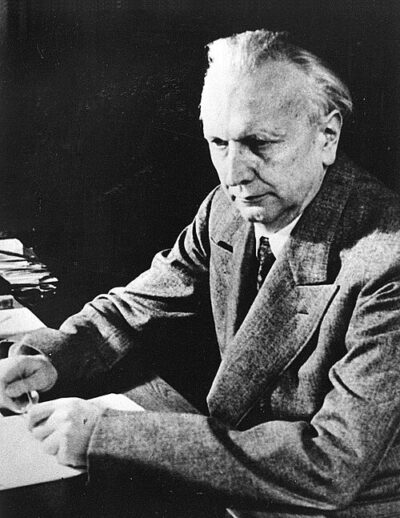
Axial Age (also Axis Age, from the German Achsenzeit) is a term coined in 1949 by the German philosopher Karl Jaspers. It refers to broad changes in religious and philosophical thought that occurred in a variety of locations from about the 8th to the 3rd century BCE.
According to Jaspers, during this period, universalizing modes of thought appeared in Persia, India, China, the Levant, and the Greco-Roman world, in a striking parallel development, without any obvious admixture between these disparate cultures. Jaspers identified key thinkers from this age who had a profound influence on future philosophies and religions and pinpointed characteristics common to each area from which those thinkers emerged.
The historical validity of the Axial Age is disputed. Some criticisms of Jaspers include the lack of a demonstrable common denominator between the intellectual developments that are supposed to have emerged in unison across ancient Greece, the Levant, India, and China; lack of any radical discontinuity with "preaxial" and "postaxial" periods; and exclusion of pivotal figures that do not fit the definition (for example, Jesus, Muhammad, and Akhenaten).
Despite these criticisms, the Axial Age continues to be an influential idea, with many scholars accepting that profound changes in religious and philosophical discourse did indeed take place but disagreeing as to the underlying reasons. To quote Robert Bellah and Hans Joas, "The notion that in significant parts of Eurasia the middle centuries of the first millennium BCE mark a significant transition in human cultural history, and that this period can be referred to as the Axial Age, has become widely, but not universally, accepted."
From the Wikipedia article “Axial Age” (en.wikipedia.org/wiki/Axial_Age), by its contributors, under CC BY-SA 4.0 (creativecommons.org/licenses/by-sa/4.0/). Copied 2026-11-17; not changed.
Confirmed Two sources agree. Cited One source, and it names where it got it. One source One source, without a reference of its own. Sources disagree The sources disagree. We show the best-supported value and keep theirs below.