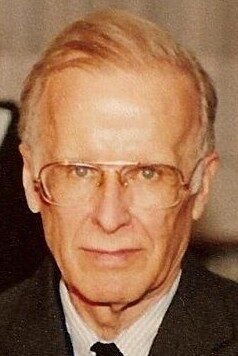
Backus–Naur form
Backus–Naur form is a metasyntax notation for context-free grammars, developed by John Backus and Peter Naur for the ALGOL 60 report (1963); foundational to formal language specification in computer science.
All 4 facts, and where they come from
Facts
4 facts · 0 confirmed by two sources · 0 cited · 4 from one source
Where this comes from
Papalocal keeps its own record. It started from these sources; what each one said is kept here as it was copied, so a change on their side never changes this page by itself. Tap one to read its version.
What Wikidata says · copied November 16, 2026 · revision 2555909055
- Described as
- metasyntax notation for context-free grammars, developed by John Backus and Peter Naur for the ALGOL 60 report (1963); foundational to formal language specification in computer science
- Other names
- BNF, Backus-Naur form, Backus normal form
- What it is
- metasyntax; formal grammar
- Named after
- John Backus; Peter Naur
- Wikipedias with a page
- 39
Wikidata item Q211577 (wikidata.org/wiki/Q211577), public domain (CC0). Copied 2026-11-16.
What Wikipedia says · copied November 16, 2026 · revision 1385398675
In computer science, Backus–Naur form or Pāṇini–Backus Form (BNF or PBF, pronounced ), also known as Backus normal form, is a notation system for defining the syntax of programming languages and other formal languages, developed by John Backus and Peter Naur. It is a metasyntax for context-free grammars, providing a precise way to outline the rules of a language's structure.
It has been widely used in official specifications, manuals, and textbooks on programming language theory, as well as to describe document formats, instruction sets, and communication protocols. Over time, variations such as extended Backus–Naur form (EBNF) and augmented Backus–Naur form (ABNF) have emerged, building on the original framework with added features.
From the Wikipedia article “Backus–Naur form” (en.wikipedia.org/wiki/Backus–Naur_form), by its contributors, under CC BY-SA 4.0 (creativecommons.org/licenses/by-sa/4.0/). Copied 2026-11-16; not changed.
Confirmed Two sources agree. Cited One source, and it names where it got it. One source One source, without a reference of its own. Sources disagree The sources disagree. We show the best-supported value and keep theirs below.