Baire set
Baire set is a definition.
All 3 facts, and where they come from
Facts
3 facts · 0 confirmed by two sources · 0 cited · 3 from one source
Where this comes from
Papalocal keeps its own record. It started from these sources; what each one said is kept here as it was copied, so a change on their side never changes this page by itself. Tap one to read its version.
What Wikidata says · copied November 17, 2026 · revision 2562582453
- What it is
- definition; mathematical concept
- Named after
- René-Louis Baire
- Wikipedias with a page
- 6
Wikidata item Q4848630 (wikidata.org/wiki/Q4848630), public domain (CC0). Copied 2026-11-17.
What Wikipedia says · copied November 17, 2026 · revision 1190284980
In mathematics, more specifically in measure theory, the Baire sets form a σ-algebra of a topological space that avoids some of the pathological properties of Borel sets.
There are several inequivalent definitions of Baire sets, but in the most widely used, the Baire sets of a locally compact Hausdorff space form the smallest σ-algebra such that all compactly supported continuous functions are measurable. Thus, measures defined on this σ-algebra, called Baire measures, are a convenient framework for integration on locally compact Hausdorff spaces. In particular, any compactly supported continuous function on such a space is integrable with respect to any finite Baire measure.
Every Baire set is a Borel set. The converse holds in many, but not all, topological spaces. Baire sets avoid some pathological properties of Borel sets on spaces without a countable base for the topology. In practice, the use of Baire measures on Baire sets can often be replaced by the use of regular Borel measures on Borel sets.
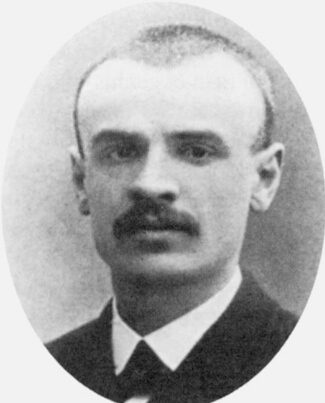
Baire sets were introduced by Kunihiko Kodaira (1941, Definition 4), Shizuo Kakutani and Kunihiko Kodaira (1944) and Halmos (1950, page 220), who named them after Baire functions, which are in turn named after René-Louis Baire.
From the Wikipedia article “Baire set” (en.wikipedia.org/wiki/Baire_set), by its contributors, under CC BY-SA 4.0 (creativecommons.org/licenses/by-sa/4.0/). Copied 2026-11-17; not changed.
Confirmed Two sources agree. Cited One source, and it names where it got it. One source One source, without a reference of its own. Sources disagree The sources disagree. We show the best-supported value and keep theirs below.