Balmer series
Balmer series is a hydrogen spectral series.
All 5 facts, and where they come from
Facts
5 facts · 0 confirmed by two sources · 0 cited · 5 from one source
Where this comes from
Papalocal keeps its own record. It started from these sources; what each one said is kept here as it was copied, so a change on their side never changes this page by itself. Tap one to read its version.
What Wikidata says · copied November 17, 2026 · revision 2550077164
- Described as
- hydrogen spectral series
- Other names
- Balmer lines
- What it is
- Hydrogen Line Spectrum; physical theory
- Comes after
- Lyman series
- Followed by
- Paschen series
- Named after
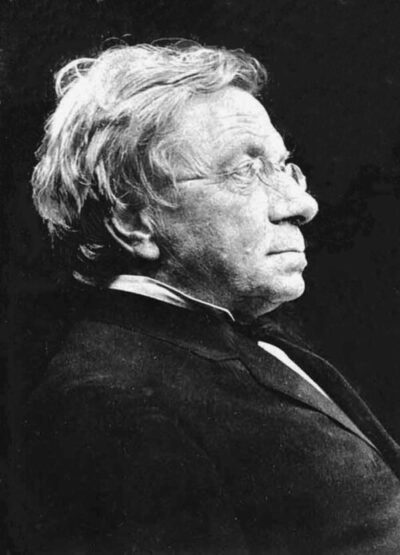
- Johann Jakob Balmer
- Wikipedias with a page
- 36
Wikidata item Q653711 (wikidata.org/wiki/Q653711), public domain (CC0). Copied 2026-11-17.
What Wikipedia says · copied November 17, 2026 · revision 1341026519
The Balmer series, or Balmer lines in atomic physics, is one of a set of six named series describing the spectral line emissions of the hydrogen atom. The Balmer series is calculated using the Balmer formula, an empirical equation discovered by Johann Balmer in 1885.
The visible spectrum of light from hydrogen displays four wavelengths, 410 nm, 434 nm, 486 nm, and 656 nm, that correspond to emissions of photons by electrons in excited states transitioning to the quantum level described by the principal quantum number n equals 2. There are several prominent ultraviolet Balmer lines with wavelengths shorter than 400 nm. The series continues with an infinite number of lines whose wavelengths asymptotically approach the limit of 364.5 nm in the ultraviolet.
After Balmer's discovery, five other hydrogen spectral series were discovered, corresponding to electrons transitioning to values of n other than two.
From the Wikipedia article “Balmer series” (en.wikipedia.org/wiki/Balmer_series), by its contributors, under CC BY-SA 4.0 (creativecommons.org/licenses/by-sa/4.0/). Copied 2026-11-17; not changed.
Confirmed Two sources agree. Cited One source, and it names where it got it. One source One source, without a reference of its own. Sources disagree The sources disagree. We show the best-supported value and keep theirs below.